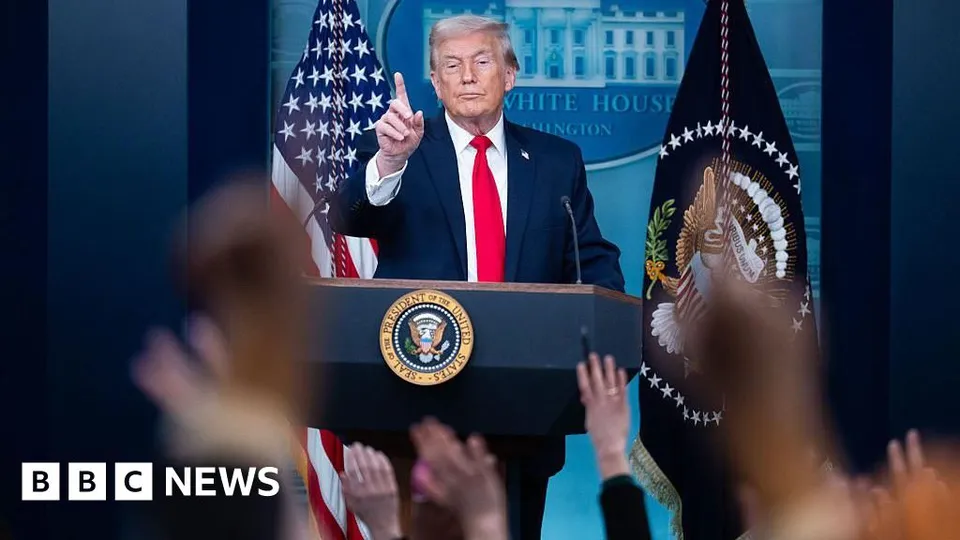
The Supreme Court has delivered a rare setback to President Donald Trump, ruling he cannot legally use emergency powers to impose reciprocal and country-specific tariffs. This decision challenges his existing trade strategy, which has significantly altered the global trade order and risked economic growth.
While the ruling invalidates some of President Trump's tariffs, it does not signal a return to pre-Trump trade policies. The average tariff rate on goods sold into America, though theoretically halved, remains significantly higher than at the start of 2025 due to tariffs imposed under different legal frameworks. For instance, tariffs enacted under the International Emergency Economic Powers Act (IEEPA) resulted in average tariffs of approximately 11% last year.
The impact on importers and US inflation has been somewhat muted. Businesses have shown agility by switching supply chains away from heavily tariffed countries and absorbing some of the increased costs. This, coupled with a desire to maintain revenue streams from soaring tariff collections, has fueled the administration's continued efforts in trade policy.
Despite this legal hurdle, President Trump has several alternative legal avenues to largely replicate existing tariffs, though these are more complex and time-consuming. This creates a window of opportunity for importers to bring in goods quickly but also carries inherent risks due to the uncertainty surrounding potential future tariff adjustments.
The administration has shown some recent flexibility, postponing plans for higher furniture tariffs and reconsidering levies on certain imported foodstuffs, likely in response to cost-of-living concerns and the potential unfeasibility of direct household tariff rebates.
Globally, the shifting trade landscape has driven countries to strengthen alternative trading relationships. While some Asian producers have benefited from supply chain shifts, China has continued to grow, particularly through IT hardware imports amid the AI boom and by focusing on emerging markets. The US's volatile trade stance may further push allies like the EU and UK towards closer cooperation.
Financial markets will also contend with this renewed uncertainty. Although a significant policy lever has been removed, the legacy of President Trump's actions, characterized by a willingness to weaponize uncertainty, persists. The world, however, has become more adept at navigating these fluctuations.