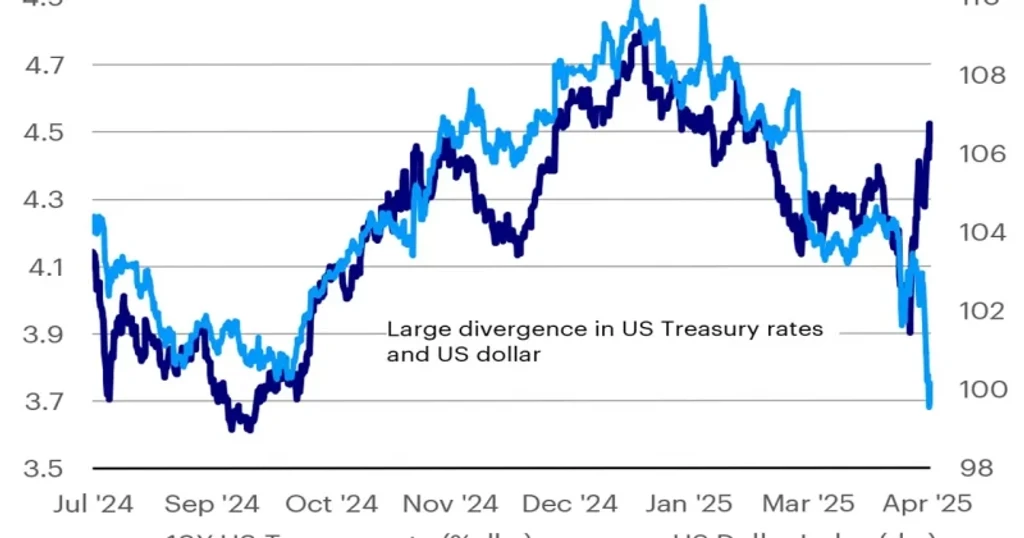
Stocks and bonds are moving in opposite directions at a pace not seen since the dot-com era. The rolling 30-day correlation between the S&P 500 and the 10-year Treasury yield has plunged to -0.68, while the 2-month correlation sits at -0.70, marking the largest opposite-direction move of the 21st century.
At the start of 2026, this correlation was positive at +0.40, near multi-year highs. Now, they're moving apart with a force that has portfolio managers rethinking their allocation strategies.
The 10-year Treasury yield hit 4.62% as of May 21, creating a gravitational pull away from equities. With government bonds offering north of 4.5% with zero credit risk, the calculus for owning volatile assets changes meaningfully.
The last time this correlation was this negative, Alan Greenspan was running the Fed, Y2K dominated headlines, and the Nasdaq was months from its peak. That era's divergence preceded a dramatic equity correction.
The speed of the reversal is notable: from +0.40 to -0.70 in months represents a wholesale regime change in how markets price the relationship between growth expectations and interest rates.
Bitcoin is trading near $80,000, and while the stock-yield divergence doesn't directly reference crypto, second-order effects matter. Higher yields increase the opportunity cost of holding non-yielding assets like Bitcoin. Each incremental basis point makes competition for capital fiercer, pressuring assets on the risk spectrum.