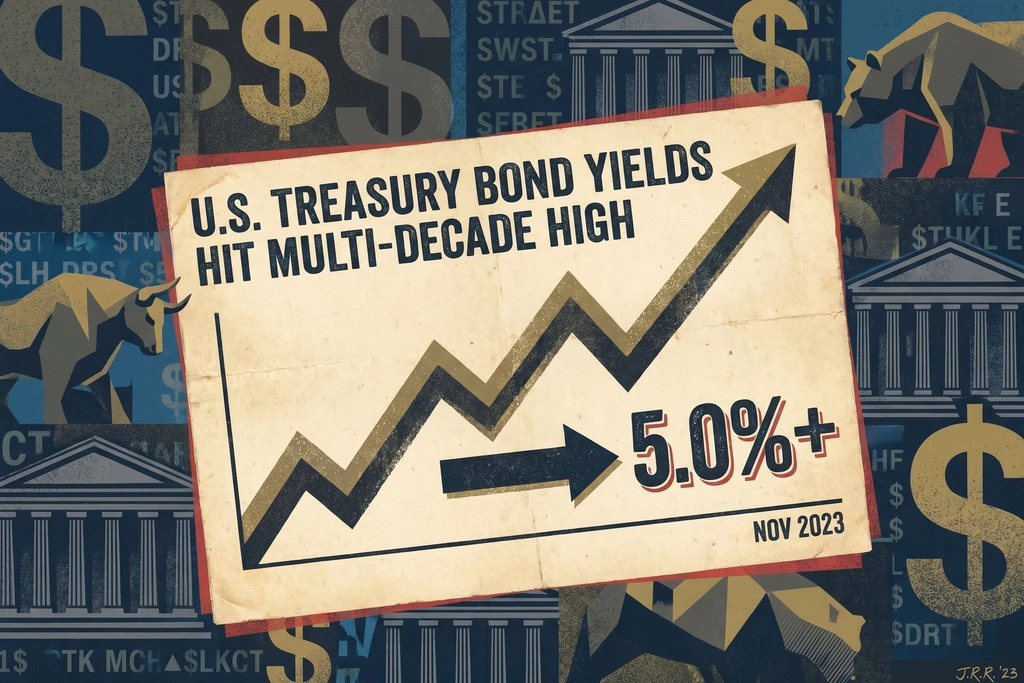
The 30-year U.S. Treasury bond yield surged to 5.2% on May 19, the highest level since 2007. The jump comes as persistent inflation pressures drive traders and investors to sell government bonds.
Economist Steve Blitz of GlobalData says the move does not directly affect consumers. Mortgages are tied to the 10-year note, and credit cards use short-term rates. However, Blitz expects pension funds to start buying long-term bonds to lock in higher returns, likely selling stocks to raise cash.
Higher yields have also weighed on U.S. stocks, particularly fast-growing companies sensitive to borrowing costs. Meanwhile, governments at all levels face higher debt expenses, a cost ultimately borne by taxpayers.