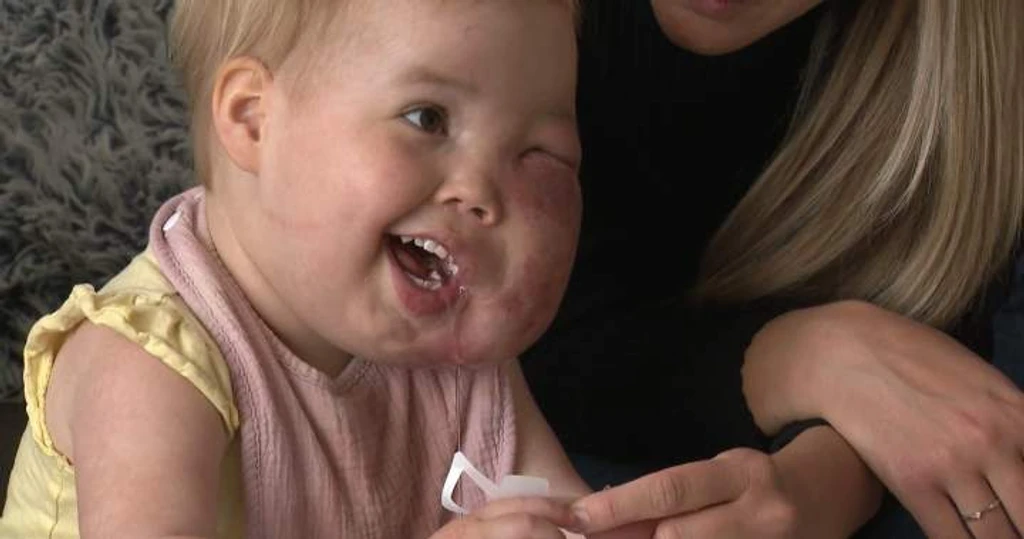
The Lieskovsky family in Alberta is in a difficult battle with the province's health system over denied funding for a potentially life-saving treatment for their two-year-old daughter, Myla. Myla suffers from a rare genetic condition known as capillary malformation-arteriovenous malformation (CM-AVM) syndrome, which causes daily bleeding and has impacted her vision, hearing, and dental health.
Standard treatments like surgery or embolization were deemed too high-risk for Myla. She has been undergoing experimental chemotherapy since she was 10 months old. A specialist in Italy, Dr. Giacomo Colletti, has developed a new technique called modified ElectroScleroTherapy (MEST), which uses medication and electrical pulses to target the malformed cells. The family traveled to Italy for the first round of treatment, costing approximately $100,000 per session.
Myla Lieskovsky, who suffers from a rare genetic disorder. Global News
Their application to Alberta's out-of-country health services committee for funding was denied. The committee cited that the treatment is not a standard of care in Canada and is therefore considered experimental. They also stated it's not covered under the Alberta insurance plan that works with the committee.
Samantha Lieskovsky, Myla's mother, expressed her frustration, stating that the Canadian standard of care would be to keep Myla on chemotherapy indefinitely, while the Italian procedure offers a potential cure and a chance for a normal childhood.
A Go Fund Me campaign started by Samantha's sister has covered the first round of treatment, but Myla will likely require several more. The family is appealing the decision and seeking legal assistance. Patient advocacy groups report a significant increase in demand for services, with families facing similar barriers to accessing necessary care.
The Lieskovsky family emphasizes the need for clearer guidelines and easier processes for families seeking life-saving treatments not available in Canada, highlighting that their fight is not just for their own daughter but for others in similar situations. Without the MEST treatment, Myla faces a lifetime of hospital visits and declining health.