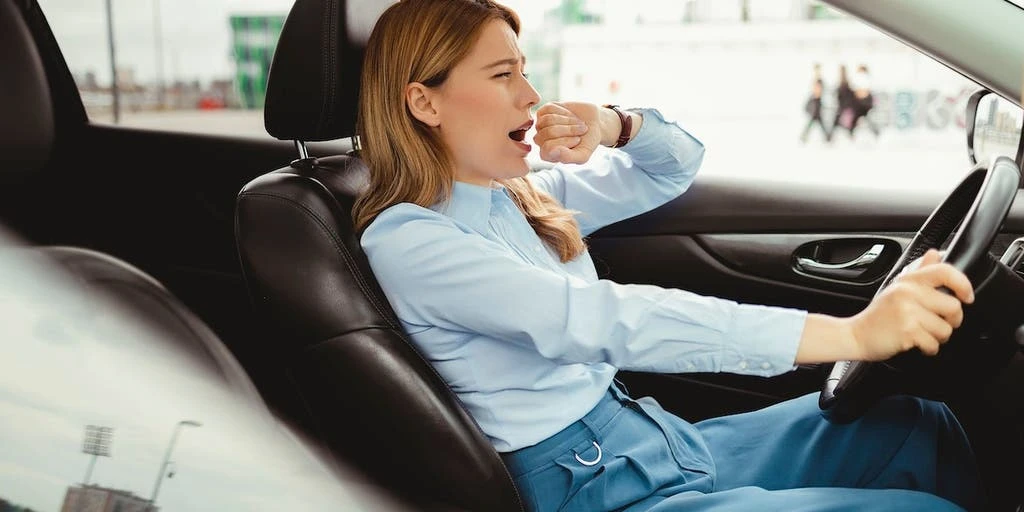
A popular medication prescribed off-label for insomnia could make driving the next morning dangerous, even if you don't feel impaired.
That's the finding of a new randomized controlled trial from Flinders University in Australia, published in the Annals of the American Thoracic Society.
Researchers studied 15 adults with obstructive sleep apnea (OSA) who also had trouble staying asleep. Participants took 50mg of quetiapine-sold as Seroquel-one night and a placebo the next.
Quetiapine is an antipsychotic used for schizophrenia, bipolar disorder, and depression, but it is widely prescribed at lower doses for sleep and anxiety.
The drug did show benefits: participants slept over 40 minutes longer, had 45% less wakefulness during the night, and saw their apnea events drop from 27 to 20 per hour.
However, a driving simulator test administered within 30 minutes of waking revealed significant impairment. Those on quetiapine had triple the number of attention lapses and swerved out of their lane more often. Eleven of the 15 participants reported feeling sleepier, but roughly one in four did not recognize how impaired they were.
Researchers warn that users may unknowingly operate vehicles or heavy machinery with dangerously slowed reaction times. Other side effects included nausea, restless legs, and a sudden drop in blood pressure upon standing in one-third of participants.
The study's small sample size and single-night observation are limitations. Experts are calling for larger, longer-term studies.
Pending more data, the recommendation is to avoid driving or safety-critical tasks for at least 9.5 hours after taking quetiapine.