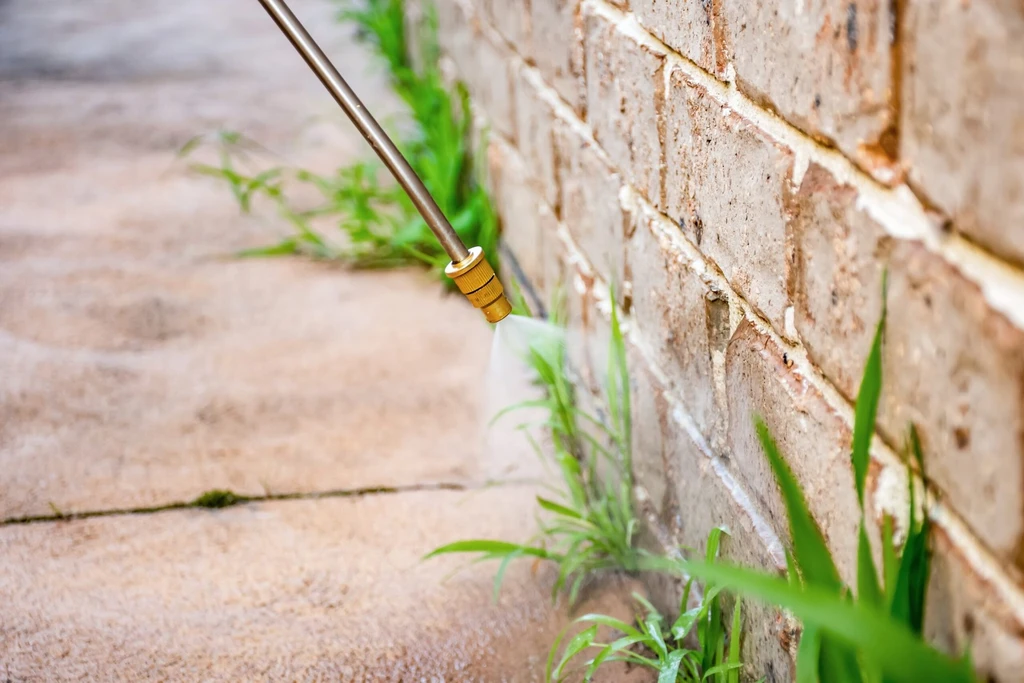
The active ingredient in vinegar, acetic acid, works by burning the plant tissue it contacts. This causes rapid desiccation of leaves and stems. However, it does not travel to the root system, making it ineffective against established perennial weeds like dandelions or thistle, which will regrow.
The concentration of acetic acid determines effectiveness. Standard household vinegar at 5% concentration is only useful against very young, broadleaf weeds within their first two weeks of growth. Horticultural vinegar, ranging from 10% to 30% concentration, is more potent and can handle a broader range of young weeds, including some grassy types like crabgrass.
This is a non-selective herbicide. It will damage or kill any plant it touches, including desirable grass and ornamentals. Targeted, precise application is essential.
Significant safety precautions are required, especially with horticultural-strength vinegar. At concentrations above 11%, acetic acid can cause severe chemical burns to skin and permanent eye injury. Protective gear including chemical-resistant gloves and splash-proof goggles is mandatory.
For best results, apply on a calm, sunny day. Weeds must be thoroughly saturated until the liquid drips off. Adding dish soap can improve adhesion to waxy leaf surfaces. Avoid use near metal fixtures, as acetic acid is corrosive.