
A single-center study reveals that inflammation during acute coronary events, not in stable follow-up periods, is a critical marker for severe coronary artery disease in patients with type 2 diabetes.
The research prospectively followed 116 patients presenting with acute coronary syndrome. Coronary disease extent was quantified using the SYNTAX score.
At hospital admission, high-sensitivity C-reactive protein levels were significantly elevated in patients with extensive coronary disease. This signal was most pronounced in individuals with diabetes or pre-diabetes, where median levels reached 5.1 mg/L compared to 2.5 mg/L in those with less complex disease. Multivariate analysis confirmed that both a high SYNTAX score and diabetes status independently predicted higher acute inflammation.
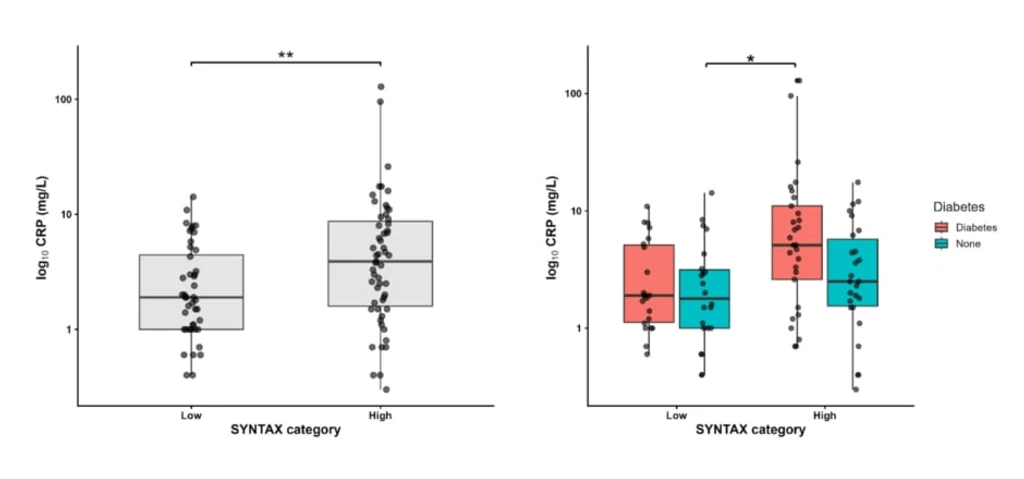
While other inflammatory markers like IL-6 and IL-18 were higher in diabetic patients, they did not correlate with coronary disease severity. Critically, the strong association between inflammation and disease extent disappeared at a follow-up exam roughly two months after discharge.
The findings suggest that the systematic exclusion of acute-phase C-reactive protein measurement may miss a key window to assess cardiovascular risk. The inflammatory response during the heart attack itself provides a unique insight into vascular vulnerability not visible during stable rehabilitation periods.