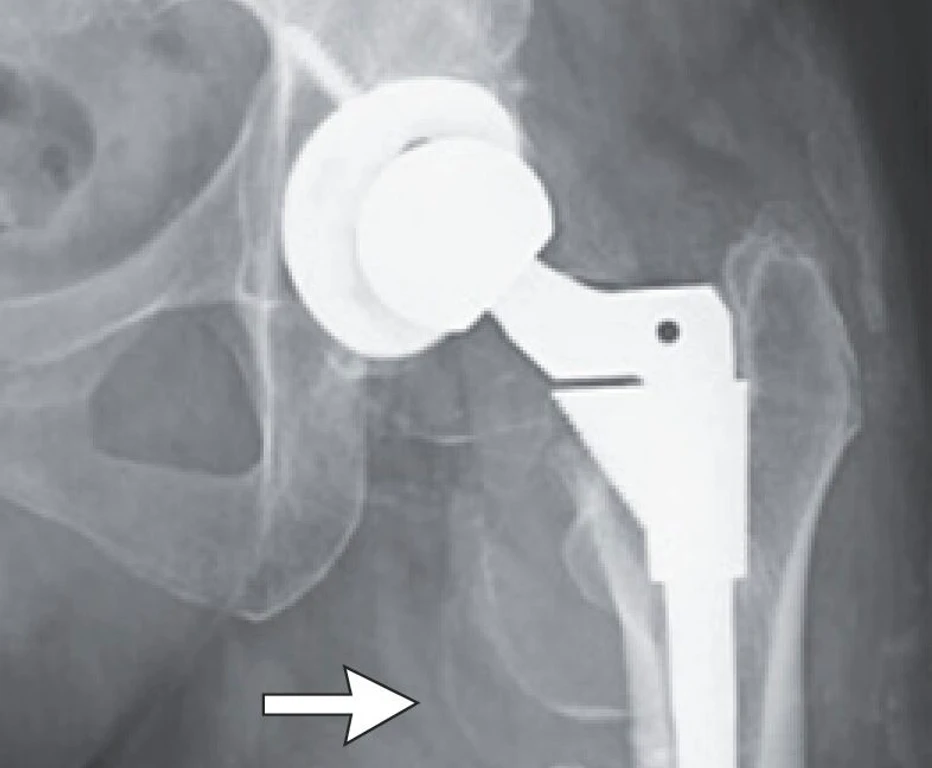
A 56-year-old woman was admitted to the hospital with alarming and worsening symptoms: painful tingling in her feet and legs progressing to numbness, stumbling, and loss of balance. She also developed memory problems, difficulty concentrating, irritability, and heart palpitations.
Initial medical history showed no clear cause. Her doctors noted she had a 20-year-old hip replacement and had undergone a revision surgery three months prior at another facility.
Testing revealed an elevated heart rate and reduced sensation in all four limbs. Her blood work showed high hemoglobin levels, and an X-ray of her hip revealed deposits around the joint.
When her previous surgical records arrived, the diagnosis became clear: severe cobalt poisoning.
Twenty years ago, she received a titanium and ceramic hip. The ceramic liner later shattered. During the recent revision, the destroyed liner was replaced with polyethylene, and the ceramic femoral head was swapped for a cobalt-chromium alloy one. Residual ceramic debris was left in the joint.
Her doctors concluded this debris acted as a grinding paste, accelerating the wear of the cobalt-chromium head and causing a rapid, massive release of cobalt into her system.
Cobalt toxicity explained her symptoms: nerve damage, cognitive issues, heart problems, and thyroid dysfunction. Cobalt also triggered overproduction of red blood cells, explaining her high hemoglobin.
During a second emergency revision surgery, surgeons found a pool of grey, metallic fluid in her joint and necrotic, silver-stained muscle tissue. They removed the dead tissue and replaced the cobalt-chromium head with a ceramic one. She began chelation therapy immediately.
Blood tests before surgery showed her cobalt level at 592 ng/mL-normal is less than 10. Her recovery was slow. While her walking and thyroid function improved, nerve pain and tinnitus persisted a year later.
The case report notes the use of cobalt-chromium alloys in hip implants has declined significantly but is still used in some revisions. This case highlights how residual debris can catastrophically accelerate cobalt release, causing rapid systemic illness.