MIAMI - Football’s most sacred principle is under review. The sport has long been defined by its relentless, uninterrupted 45-minute halves, free from coaching timeouts and commercial stoppages. That identity is now being altered, one hydration break at a time.
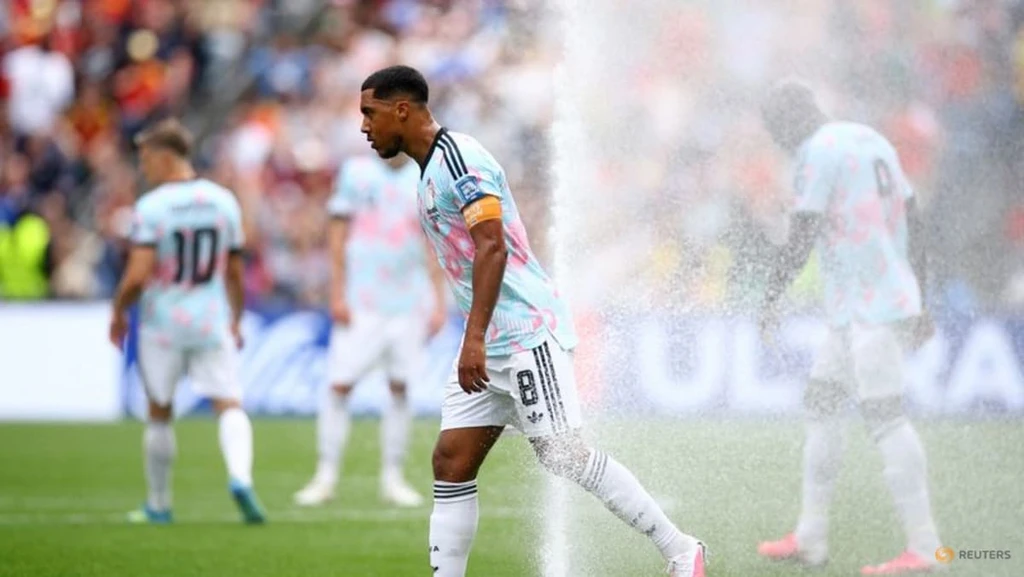
The three-minute cooling breaks, mandated by FIFA for the North American World Cup to protect players from extreme heat, have evolved rapidly beyond a simple health measure.
What began as a player welfare initiative has transformed into a tactical window. During a pre-tournament friendly, US coach Mauricio Pochettino was seen huddling his team around a laptop, resembling an NBA timeout rather than a traditional football pause. Managers now halt momentum, reorganize formations, and deliver detailed instructions at critical game junctures.
These mandatory pauses also create guaranteed visibility for advertisers. Michael Johnson, a research analyst at S&P Global, noted the slots are extremely valuable, suggesting ad spots could potentially command rates approaching the Super Bowl level of $7 to $9 million.
The shift has provoked a fierce backlash from purists. Former Premier League striker Stan Collymore stated, “I’ve never seen one match... that’s been better with more stoppages. Not one.” An analysis by PeakMetrics indicates 75 percent of online conversation surrounding the breaks is unfavorable, with fans decrying the effective division of matches into four quarters.
Football’s lawmakers, IFAB, allow breaks between 90 seconds and three minutes. UEFA and the Premier League currently have no plans to expand their use. Yet, the game has a history of adopting unthinkable innovations, from the back-pass rule to VAR, suggesting hydration breaks may become a permanent fixture in the modern era.