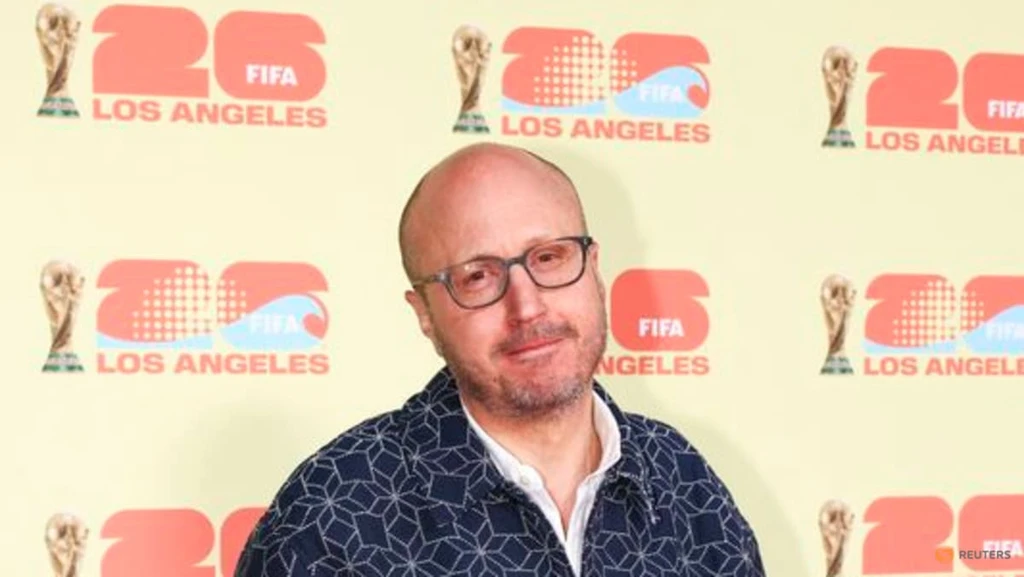
LOS ANGELES, March 16 - Politics at the World Cup is "nothing new," says Roger Bennett, founder of Men in Blazers Media Network. The tournament, he argues, has always carried national histories, cultures, and conflicts onto the pitch.
Bennett, author of "We Are the World (Cup)," spoke ahead of the 2026 men's tournament - the first to span three nations: the United States, Canada, and Mexico. It will also be the largest ever, expanding to 48 teams.
"The joy of the World Cup is that when two teams take the field, the nation's histories, the nation's politics, the nation's cultures take the field alongside them," Bennett told Reuters.
Iran’s potential withdrawal looms over the event following U.S. and Israeli air strikes on Tehran. While not yet official, such a move would mark a first in the modern era. Iranian officials have questioned whether athletes can participate under current conditions.
Bennett recalled the 1998 U.S.-Iran match during the France World Cup, played amid lingering tensions from the 1979 hostage crisis. American fans, hoping for symbolic retribution, were crushed by a 2-1 loss. "That defeat probably set football back 20 years in the U.S.," he said.
Despite geopolitical anxieties, Bennett noted past concerns - like those before South Africa 2010 and Brazil 2014 - were ultimately overshadowed by the unifying power of the game.
He views the World Cup as a mirror to the world - even when the reflection is uncomfortable.
Bennett's personal journey parallels soccer’s rise in America. Arriving in the 1990s, he found a sport dismissed as fringe. By 2026, he expects mainstream embrace.
On contenders, he favors cohesive European powers: Spain, with its creative synergy, and defending threat France. England, though talented, remain "Sisyphus in cleats." Norway, led by Erling Haaland, emerges as a dark horse.
Still, his heart leans toward the U.S. team - even if Europe sets the standard.