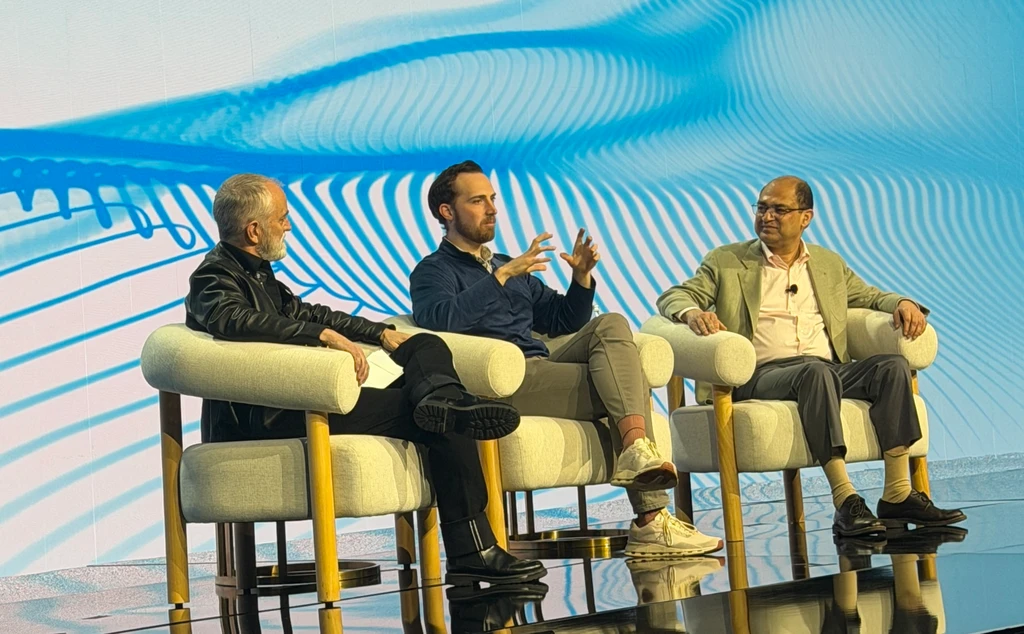
AI is no longer a development sidecar; it's fundamentally reshaping the entire software development lifecycle. Jordan Topoleski, COO of AI-powered code editor Cursor, highlighted that planning, design, testing, and review are now the bottlenecks, not coding itself. AI can generate 60% to 80% of code, shifting organizational focus and requiring a redefinition of success metrics beyond mere lines of code.
Cursor's impact is profound. In just twelve months, enterprise adoption of AI-generated code for production use has surged from 6% to over 60%. Internally, Cursor achieved 97.3% AI-generated code production after implementing cloud agents. This rapid scaling overwhelms traditional workflows, necessitating a focus on downstream effects like code review and CI/CD.
Cursor's evolution spans three AI waves: initial code completion, AI agents as pair-programming colleagues, and advanced cloud agents for orchestrating longer tasks. This elevates the developer role to one of managerial oversight, coordinating multiple AI agents.
Achieving ROI from AI hinges on organizational change, not just tools. Topoleski stressed the need for explicit top-down sponsorship and a clear AI use philosophy to address developer concerns about job security. Experimentation, through hackathons or dedicated time, is crucial. Cursor's "bug mod" proactively identifies issues, building confidence and sustaining AI-driven velocity.
The AI for software development market is massive and production-proven. Cursor, a three-year-old company, has achieved a $2 billion annual revenue run rate, with approximately 70% of Fortune 500 companies and over 2 million developers using the product weekly. This category is leading the AI market by demonstrating real-world production capabilities.