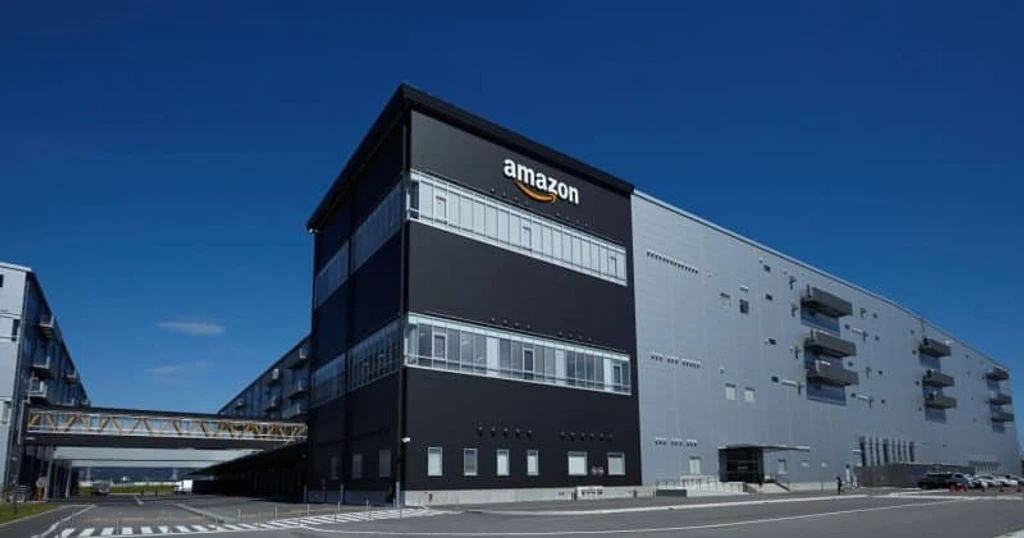
Amazon Web Services has quantified a critical environmental cost of the digital age. Its global data centers withdrew approximately 2.5 billion gallons of water in 2025, enough to fill 3,800 Olympic swimming pools, just to keep servers cool.
This disclosure marks the first time Amazon has publicly reported aggregate annual water figures. The timing is significant as regulators and investors increasingly scrutinize Big Tech's ecological demands, particularly in drought-prone regions where new data center construction faces community opposition.
Despite the massive total, AWS reported a 2% year-over-year decline in withdrawals, even as it aggressively expanded infrastructure for artificial intelligence. The company achieved a water usage effectiveness (WUE) of 0.12 liters per kilowatt-hour. This metric is roughly seven times better than the industry average of 0.84 L/kWh, driven by strategies like free-air cooling, higher server operating temperatures, and transitioning to treated wastewater.
Amazon maintains it is 75% of the way toward its goal of becoming 'water positive' by 2030. For investors, the superior efficiency provides a strong benchmark. Superior water management is increasingly a competitive advantage that determines the speed of regulatory approvals and the long-term viability of expansion in water-scarce locations.