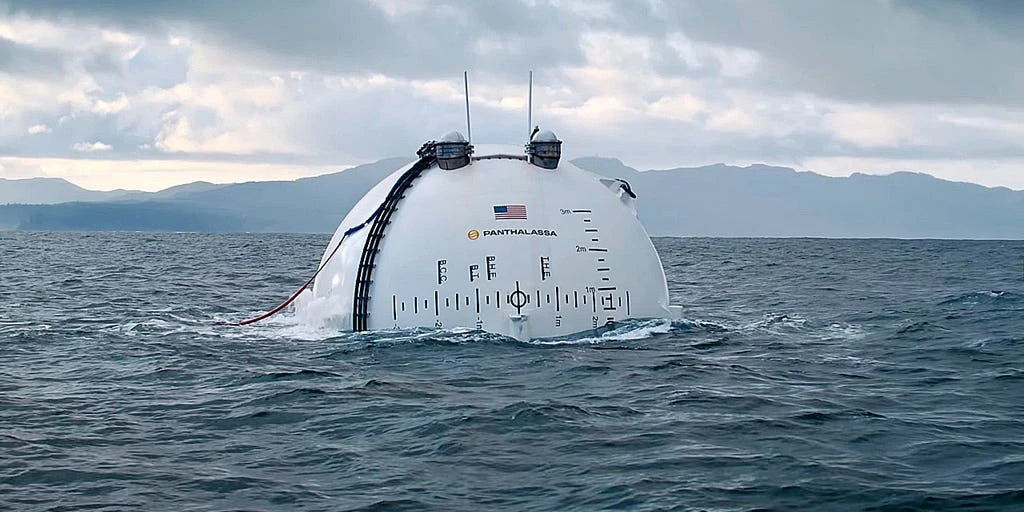
Panthalassa has raised $140 million in Series B funding to develop autonomous AI data centers that float on the ocean. The round, led by Palantir co-founder Peter Thiel, brings total funding to $210 million. The company plans to deploy its Ocean-3 pilot nodes in the northern Pacific Ocean by late 2026.
Panthalassa's floating nodes are designed to capture wave motion to generate electricity. Seawater helps cool the onboard processors. The nodes run AI inference tasks, meaning they respond to user prompts after the model has been trained. The company says it has spent a decade developing the power generation and autonomous operations systems.
Key challenges remain. The nodes depend on low-Earth-orbit satellite links for connectivity, which may be slower than the fiber-optic connections used in land-based data centers. Maintenance in harsh ocean conditions, including saltwater corrosion and storm damage, is a significant hurdle. Panthalassa plans to demonstrate commercial deployments by 2027.
The concept has been tested before. Microsoft's Project Natick showed underwater servers could run reliably, though the project was later ended. Chinese companies are pursuing similar underwater data center projects. Panthalassa's approach is unique in combining wave power with onboard AI chips and satellite connectivity.
The broader implication: as AI's massive electricity demands strain energy grids, ocean-based computing could reduce pressure on local communities and the grid. But the company must prove its nodes can survive years at sea without frequent repairs.