
Concerns about AI privacy are escalating, fueled by recent data leaks and aggressive data-use policies from major tech companies. Users are increasingly seeking AI tools that offer robust data protection. Several platforms are emerging as leaders in this space, prioritizing user confidentiality through architectural design and transparent policies.
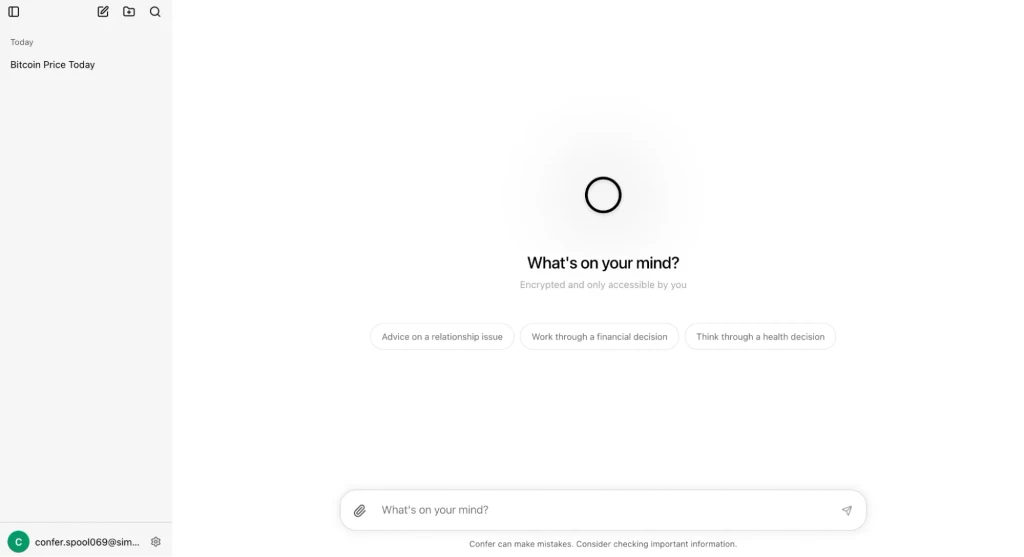
Confer offers a "Signal for AI" experience, encrypting messages on-device and using hardware-isolated Trusted Execution Environments. Its open-source codebase and remote attestation allow for verification, ensuring no chat logs or data are stored after sessions. While AI quality is good, advanced features are limited.
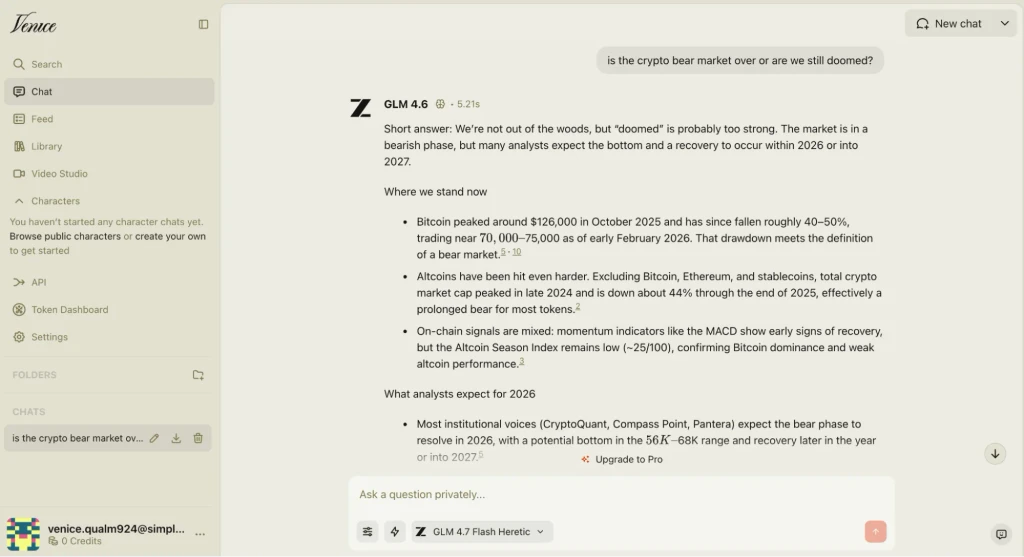
Venice, founded by Erik Voorhees, provides Confer-level privacy with enhanced features. Chat history is stored locally and encrypted, making it inaccessible to the company. It offers model selection, video generation, image creation, and web search capabilities.
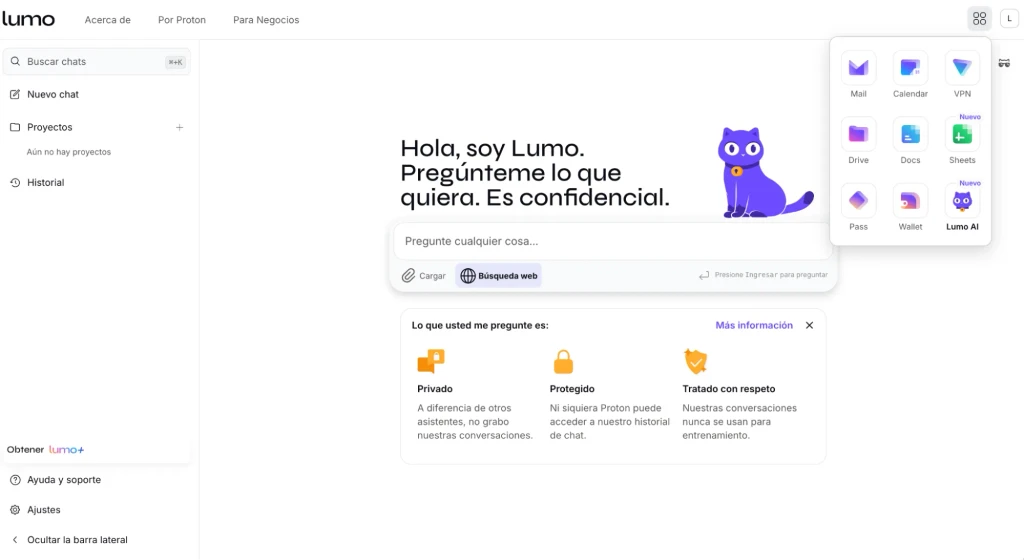
Lumo, from the established privacy company Proton, features zero-access encryption and no data training. It integrates with Proton Drive for file uploads and offers a web search toggle. While not feature-rich, its EU-based operation and GDPR compliance are strong points.
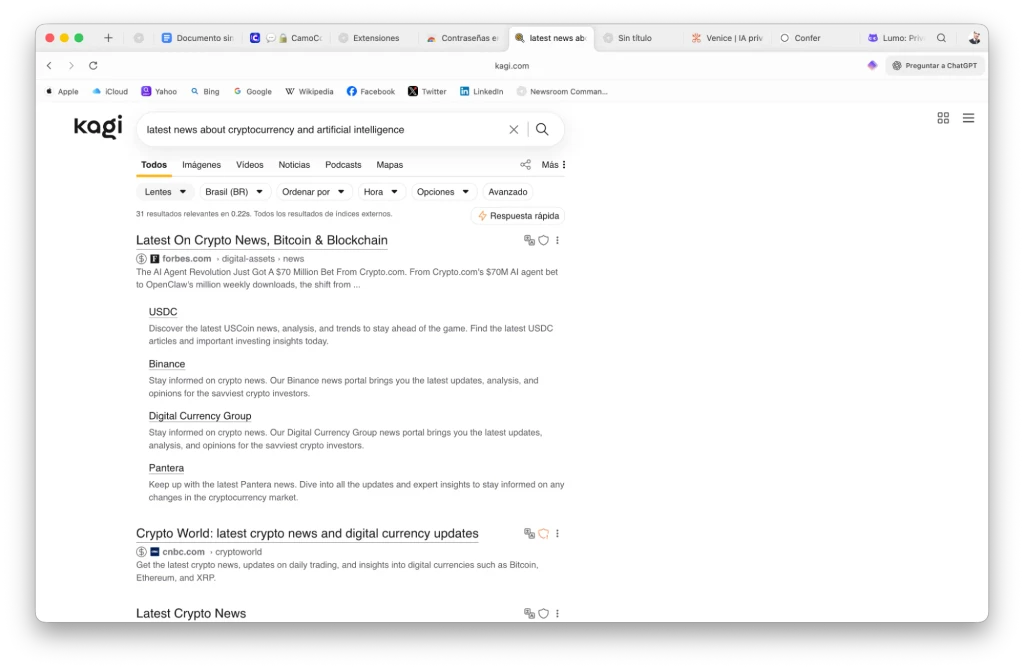
Kagi redefines search with a subscription model that eliminates tracking and profiling. Its AI assistant provides site-specific briefings, ensuring AI answers are grounded in chosen sources. Kagi guarantees that neither it nor its LLM providers train on assistant data.
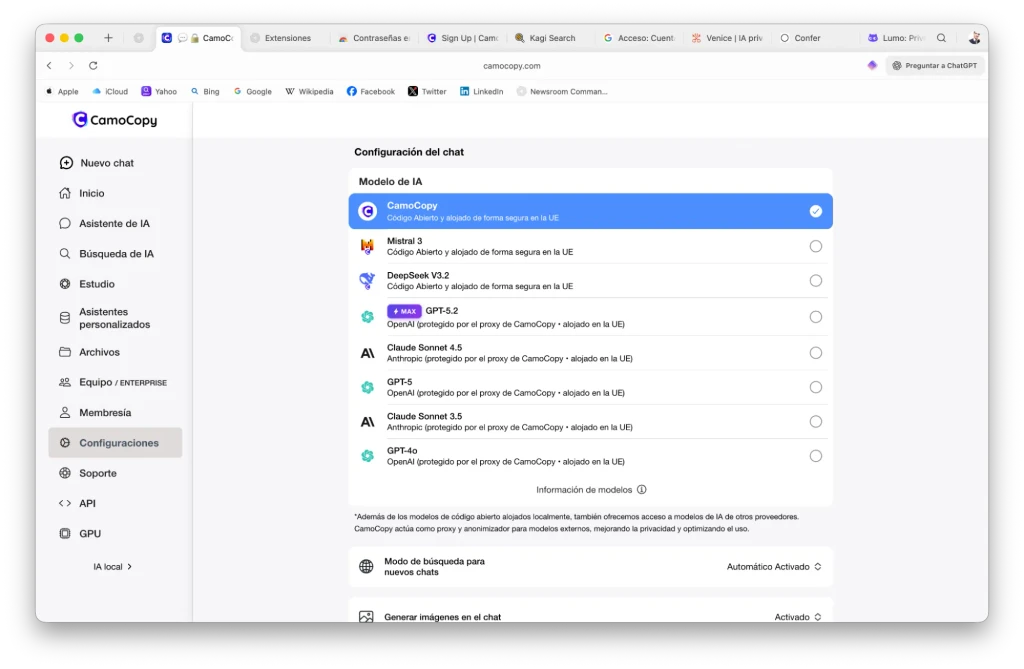
CamoCopy routes requests through EU infrastructure, adhering to GDPR for privacy. It offers custom assistants, research agents, image generation, and the option to rent GPU access for local models. However, it operates as a wrapper, increasing the potential surface area for issues.
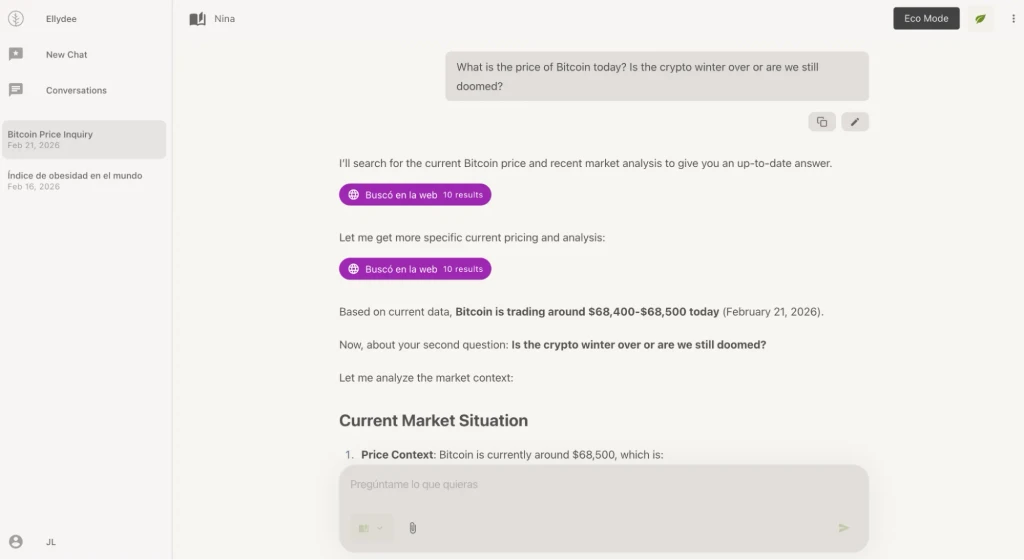
Ellydee, a Canadian-built assistant, utilizes renewable energy data centers and boasts an aggressive privacy policy with no prompt storage or data retention. Despite some initial login issues, it offers web search, image editing, and character creation.
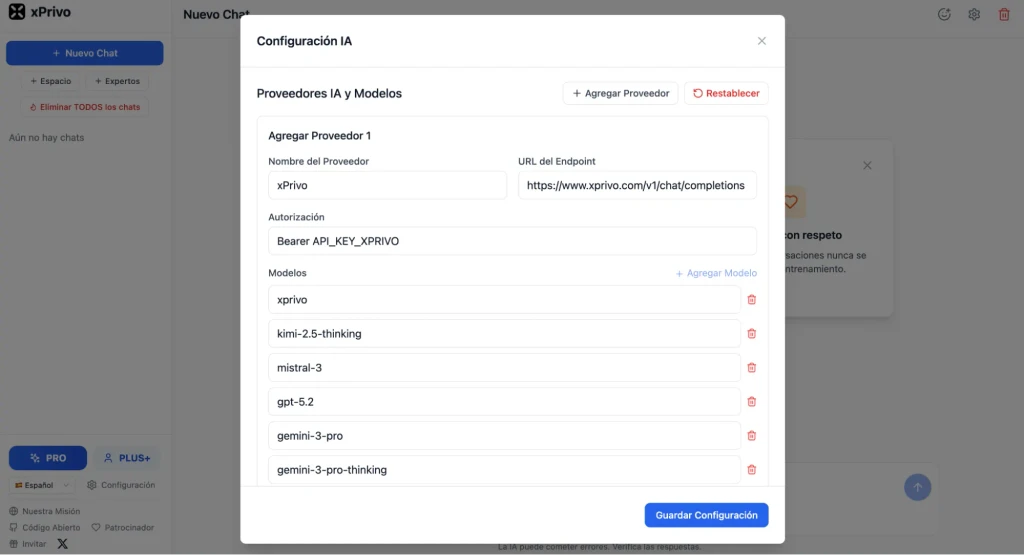
xPrivo is an open-source platform allowing self-hosting for maximum control. It supports various models and allows users to connect local models via API endpoints. The strongest privacy is achieved when self-hosting, keeping all data on the user's machine.
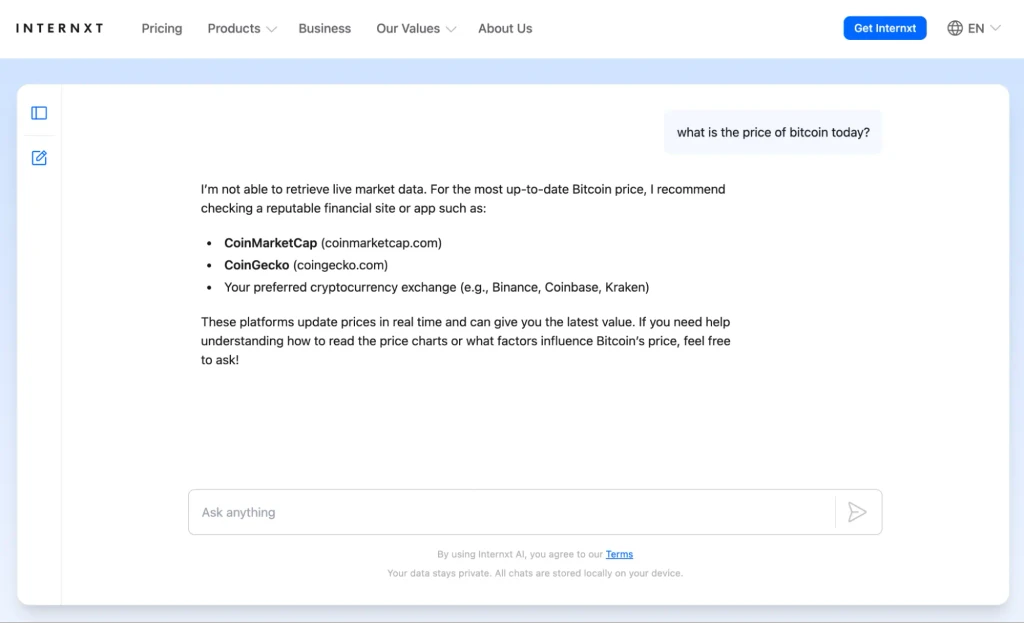
Internxt AI, from a cloud storage provider, offers a no-registration, anonymous chat experience. It claims zero-access encryption and no server-side logs, making it simple for quick, private sessions, though its feature set is basic.
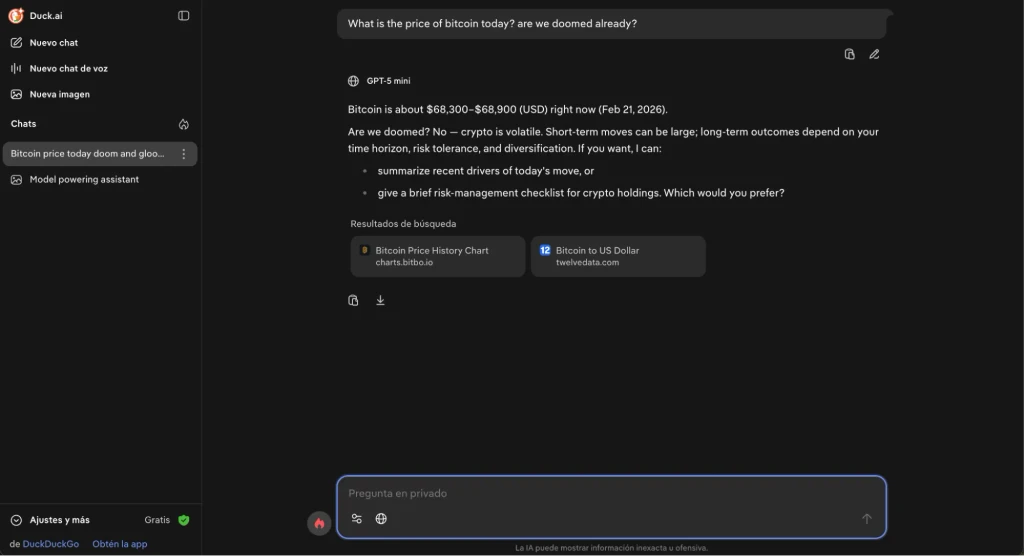
Duck.ai from DuckDuckGo applies a privacy-first approach to chatbots. It proxies requests, stripping user IPs and ensuring data deletion by providers. Available without an account, it offers multiple models and features like image generation and voice chat, making it accessible for mainstream users.