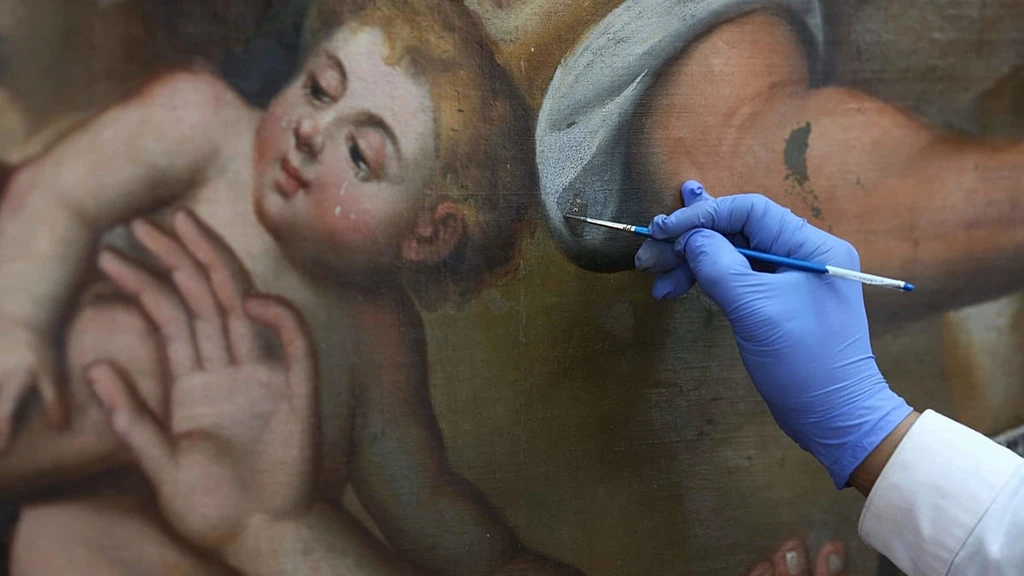
Art restoration demands precision and interdisciplinary knowledge. New technologies, including AI and sustainable materials, promise faster, cheaper, and more environmentally friendly restoration methods.
AI In Art Restoration
Alex Kachkine, a researcher at MIT, has developed a method using AI to restore damaged paintings. The process creates a digitally restored image and prints it onto a thin polymer film. This mask can be placed over the painting and later removed, preserving the original piece. This approach restored over 57,000 hues in under four hours, making it 66 times faster than traditional methods.
The method adheres to modern conservation ethics by ensuring reversibility and documentation.
Environmentally Friendly Materials
The GREENART project, funded by the EU, has developed eco-friendly cleaning gels and protective coatings using polyvinyl alcohol (PVA) polymers. These gels have successfully cleaned Bridget Riley's paintings at Tate Britain.
Chemical Innovations
Beijing researchers suggest using cellulose derivatives for the restoration of paper, oil paintings, textiles, pottery, porcelain, and murals. These materials are renewable and low-toxicity, aligning with green conservation requirements.
These innovations enhance the restoration process, addressing environmental challenges and technological advancements.