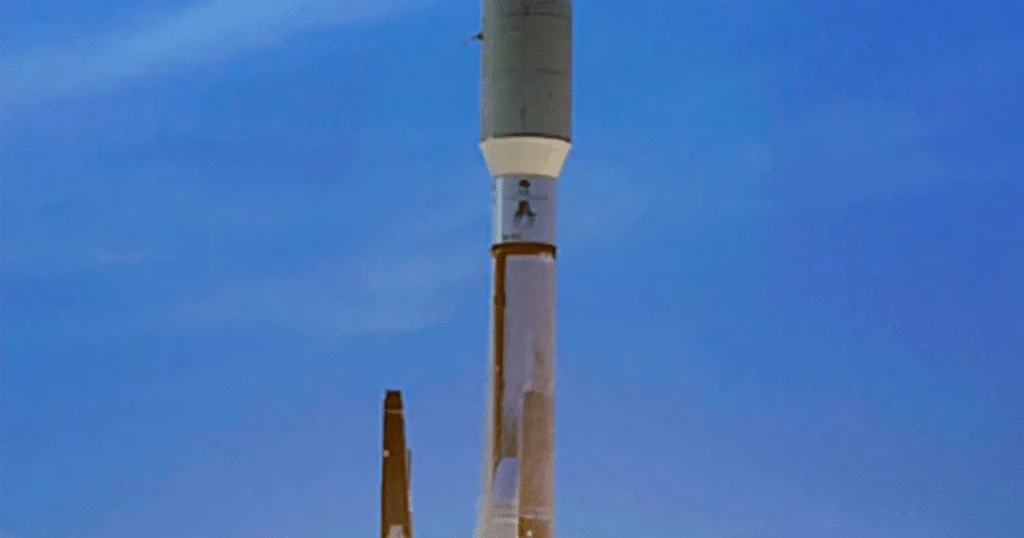
Amazon has placed 29 additional satellites into low Earth orbit, pushing the total number of spacecraft in its broadband constellation to 396. The payload was launched aboard a United Launch Alliance Atlas V 551 rocket from Cape Canaveral Space Force Station on July 2.
The company now faces a crucial regulatory milestone. The FCC requires that roughly half of the planned 3,200-satellite constellation be operational by July 30, 2026. With billions already invested, the current deployment represents only 12% of the total network.
This mission marked the final Atlas V flight dedicated to the Amazon program. Once the satellites reached an altitude of approximately 465 kilometers, operational control was transferred to the mission team in Redmond, Washington, for system checkouts. Amazon has diversified its launch logistics, holding agreements with SpaceX, Arianespace, and Blue Origin for future missions.
The initiative places Amazon in direct competition with SpaceX’s Starlink network, targeting high-speed internet connectivity for global markets, with a specific focus on unserved and underserved regions. The full 3,200-satellite system has a regulatory deadline of July 30, 2029, requiring a significant acceleration in launch cadence.