Developers are increasingly using artificial intelligence but a sharp decline in trust for AI tools is creating a significant paradox. A recent Stack Overflow survey revealed that while 84% of developers utilize AI, only 29% trust its accuracy. This highlights the growing pains as AI integrates into enterprise operations, with persistent questions around security, memory requirements, cost, and interoperability challenging the narrative of AI simplifying tasks.
"If AI is supposed to be a revolutionary productivity tool, then why am I still doing most of the work?" questioned Tony Loehr, a solutions engineer.
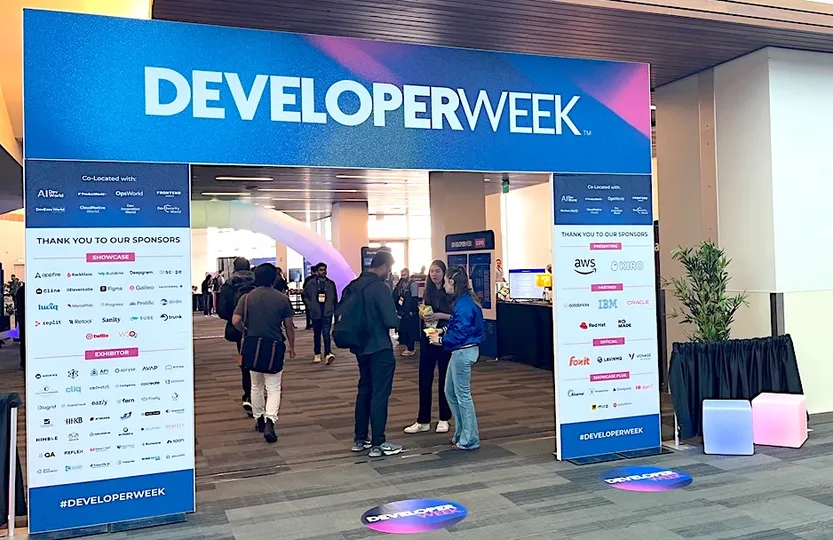
At the recent Developer Week conference, a central issue discussed was AI's heavy reliance on memory. AI servers require significantly more memory than traditional machines to deliver accurate results. Richmond Alake, director of AI developer experience at Oracle, emphasized that memory must be a primary consideration for building AI agents in production. Oracle is addressing this with its AI Database, which acts as an Agent Memory Core to provide unified retrieval and persistent memory for agents.
Moving towards smaller AI models offers another solution to improve accuracy and reduce memory needs. Techniques like quantization, championed by Red Hat, streamline this by converting large language model weights to lower-parameter formats. This significantly reduces memory load, enabling complex models to run on less hardware and lowering operational costs.
However, many tools still focus on accessing leading large models. The industry is weighing the benefits of both small and large models. Jody Bailey of Stack Overflow notes that while foundation models remain strong, smaller models have their place.
The role of Model Context Protocol (MCP) servers, which connect AI agents to external data and applications, is also under scrutiny. Security professionals have flagged concerns regarding the governance of MCP, with many exposed servers lacking proper authentication. Companies like Descope and WSO2 are developing solutions to enhance security and governance for MCP interactions.
Interoperability is another critical challenge, with IBM positioning its AI Gateway as a middleware platform to manage the integration of AI tools. Nazrul Islam of IBM stated that the core problem lies in the interactions between AI components, not the intelligence of the models themselves. Resolving issues of security and interoperability is crucial for full enterprise adoption of AI solutions.