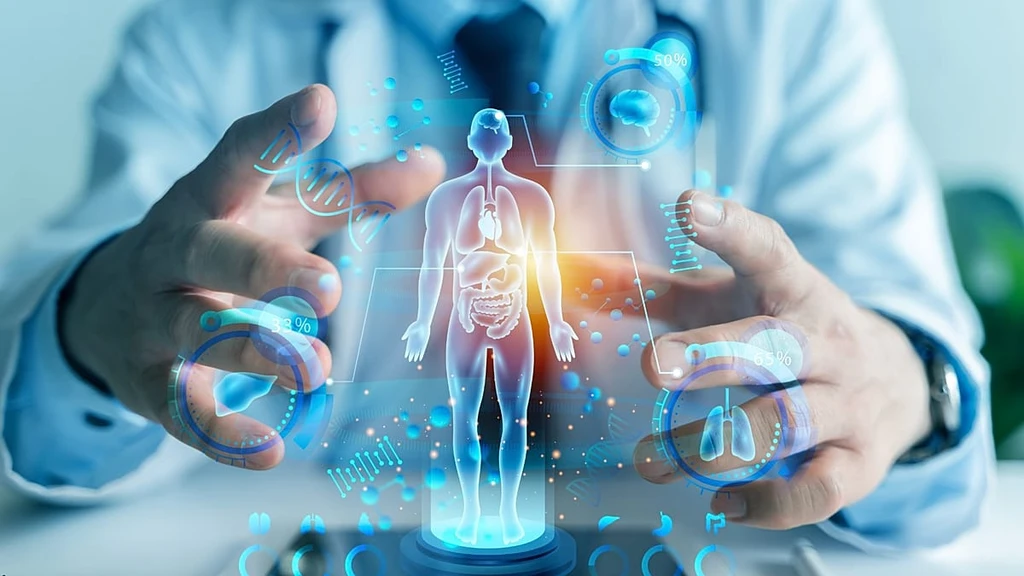
Meta CEO Mark Zuckerberg and his wife Priscilla Chan are backing a new initiative to build AI models of human cells, which they claim could help "accelerate the cure and prevention of all diseases."
Their non-profit, Biohub, announced a five-year, $500 million project to create technologies and datasets for predictive cell models. The data will be made open and freely available to researchers worldwide.
Biohub says AI simulations of human cells could allow scientists to study disease digitally at a scale and speed impossible in a lab today. If accurate enough, these models could reveal causes of disease and point toward new treatments.
The organization has already gathered the largest single-cell datasets globally and built specialized computing infrastructure for biological research. Partners include chipmaker Nvidia and leading research institutions.

"To build AI that can accurately represent the full complexity of biology and accelerate scientific research, we need orders of magnitude more data than exists today," said Alex Rives, Biohub's head of science.
Biohub's long-term goal is to cure all human disease through the intersection of AI and biology, a vision Zuckerberg outlined last year. The new initiative reflects a growing belief across the life sciences industry that AI models trained on vast biological datasets could transform drug discovery.
Other tech giants are also pushing into AI-powered biology. Isomorphic Labs, an Alphabet company built on DeepMind, is using AI for drug discovery. Microsoft has released healthcare AI models for genomics and clinical records, while Nvidia's BioNeMo platform is used for AI-driven drug discovery.