
A new report by Citrini Research has been partially blamed for a software and payments stock sell-off on Monday. The report outlined extreme scenarios in which AI could severely disrupt the economy, from wiping out a sizable share of the workforce and slashing consumer spending to threatening the U.S. mortgage market.
Citrini's "Global Intelligence Crisis" report, which gained significant traction, discussed how AI agents could drive corporate profits so high that human labor becomes redundant, potentially triggering a recession.
The report projects a June 2028 scenario where the S&P 500 is down 38% from its all-time high, unemployment exceeds 10%, private credit unravels, and prime mortgages crack - all while AI surpasses expectations.

Citrini theorized the emergence of "Ghost GDP," describing output that appears in national accounts but never circulates through the real economy. This could result in massive white-collar layoffs, reduced consumer spending, and a recession.
Computing and AI company IBM saw its largest single-day drop in 25 years, tumbling 13.1%. Microsoft, Oracle, and Accenture also experienced significant declines. Credit card platforms Visa, Mastercard, and American Express fell as Citrini warned of cascading defaults in private credit and software-backed loans.
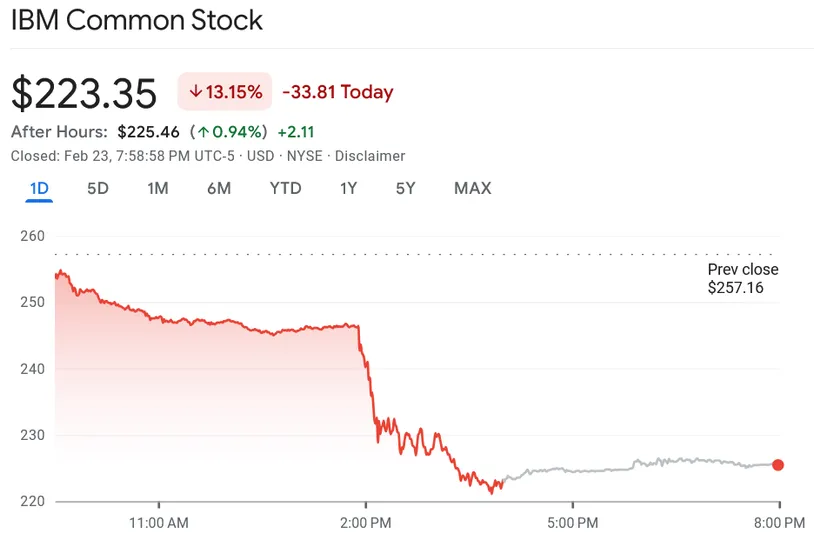
Investor anxiety was compounded by warnings from risk theorist Nassim Taleb and insights from Anthropic regarding AI's potential to modernize legacy software systems, impacting companies like IBM that rely on older technologies. Citrini identified agentic AI tools as a key driver of this potential economic shift, creating a feedback loop that accelerates workforce displacement and consumer spending decline.
However, some tech investors argue that the high costs of deploying AI agents currently do not justify widespread human replacement.