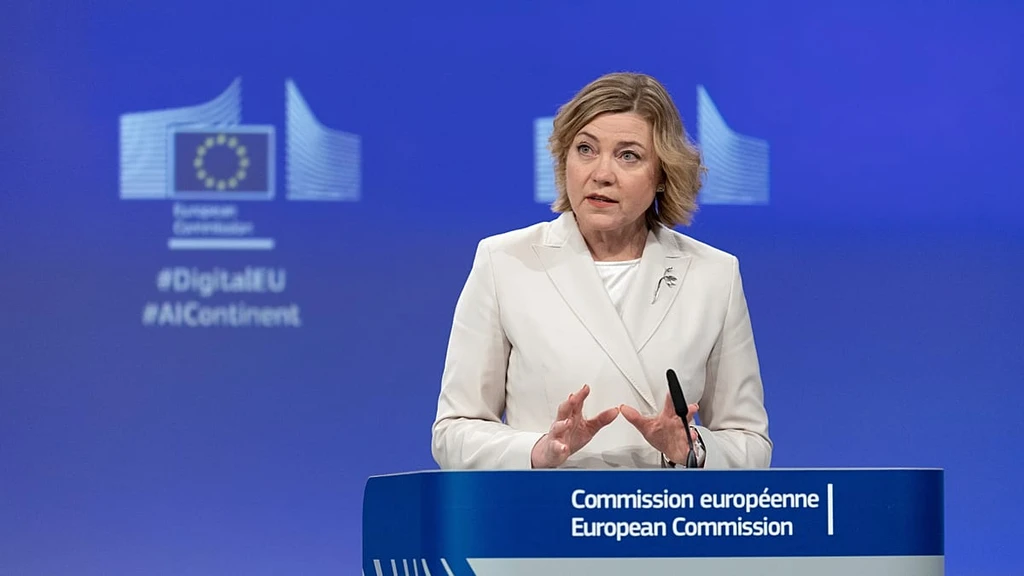
The European Commission has unveiled a comprehensive plan to bolster homegrown technologies and reduce reliance on US and Chinese firms. The initiative targets cloud infrastructure, AI services, open source, and chip manufacturing, sectors currently dominated by American giants like Google, Microsoft, and Amazon, as well as Chinese conglomerates Alibaba and ByteDance.
"We live in a world where geopolitics and technology are inseparable. Those who champion technological innovation will shape the future, and we must ensure that Europe plays a leading role," said Henna Virkkunen, European Commission Executive Vice President.
The package proposes four tiers of digital sovereignty for public procurement, with the highest level effectively barring non-European firms from sensitive sectors like defense and healthcare. This aims to prevent a "kill switch" scenario where foreign governments could cut off access to critical services.
MEP Axel Voss called the approach "bold and pragmatic," stating, "Building genuine European cloud and AI sovereignty is overdue."
In chips, the EU is revising its strategy after the first Chips Act failed to bring semiconductor factories back. The new focus is on stimulating demand for European chips, particularly in automotive sectors, to reduce dependence on Chinese-subsidized producers.
MEP Matthias Ecke noted, "Europe cannot regulate its way out of technological dependency. It must build its own capacity."
All eyes are on AI, where the market is dominated by OpenAI, Anthropic, and DeepSeek. European preference in defense contracts could help Mistral AI, the EU's only cutting-edge AI company.
The EU lags in data center construction, hindered by slow permitting, high energy costs, and land scarcity. It's also joining the US-led Pax Silica initiative for chip supply chains, acknowledging short-term reliance on Nvidia.
Potential backlash from Washington and Beijing is a concern, but EU insiders cite the Turnberry agreement with the US as a stabilizing factor. China relations are more fraught, with trade tensions escalating.
Europe holds leverage through ASML, the Dutch company with a near-monopoly on chip-making machinery. The package also promotes open-source technologies to unify the fragmented European tech landscape.
Virkkunen cautioned, "80% of technology is coming from outside Europe. We will not change that overnight."