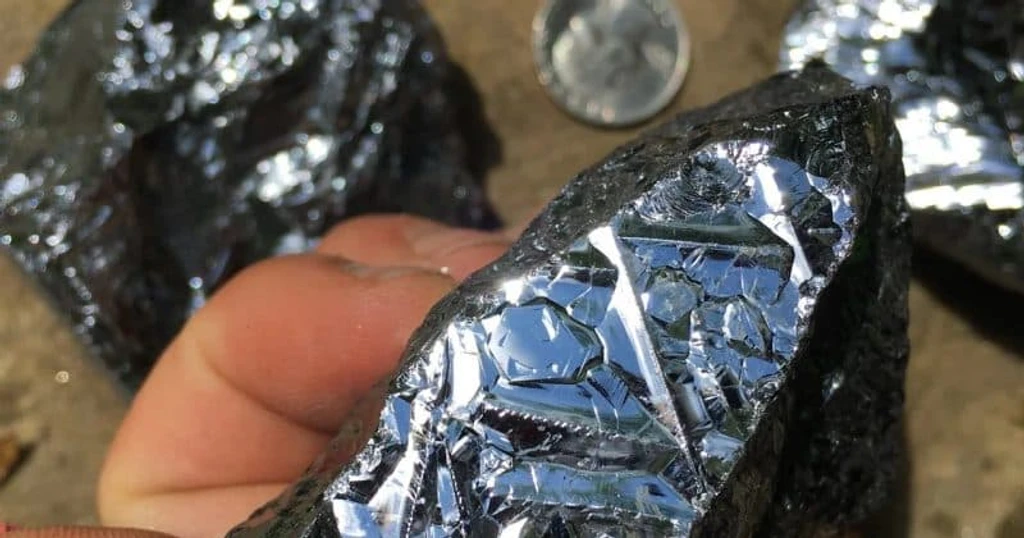
China has cleared a critical bottleneck in quantum computing hardware. The China National Nuclear Corporation announced the first successful independent mass production of silicon-28. This ultra-pure isotope boasts an abundance exceeding 99.99%, serving as the foundational material for next-generation silicon-based quantum chips.
The breakthrough originated at the Research Institute of Physical and Chemical Engineering of Nuclear Industry in Tianjin. It aligns with Beijing’s broader strategy of technological self-reliance, specifically targeting sectors where foreign supply chain dependence poses national security risks.
Standard silicon contains isotopes with nuclear spin that create interference noise for qubits. Silicon-28 possesses zero nuclear spin, dramatically reducing this environmental disruption. Qubits built on these substrates maintain quantum states longer, improving coherence time and calculation reliability. Crucially, this achievement represents industrial-scale production rather than limited laboratory batches, distinguishing actual hardware supply chains from academic research.
This development intensifies the technological rivalry between Washington and Beijing. As the US tightens export controls on advanced semiconductors, China is accelerating domestic production across the entire stack. By building silicon-28 capabilities in-house, the China National Nuclear Corporation signals supply chain sovereignty and reduces vulnerability to future trade restrictions.
Silicon-based approaches offer compatibility with existing semiconductor fabrication infrastructure, unlike superconducting or trapped-ion architectures pursued by Western firms. Controlling the purest substrate material is a prerequisite for fault-tolerant quantum computing. This advancement also carries implications for digital assets, as powerful quantum computers theoretically threaten current blockchain cryptographic standards, prompting the industry to accelerate post-quantum algorithm adoption.