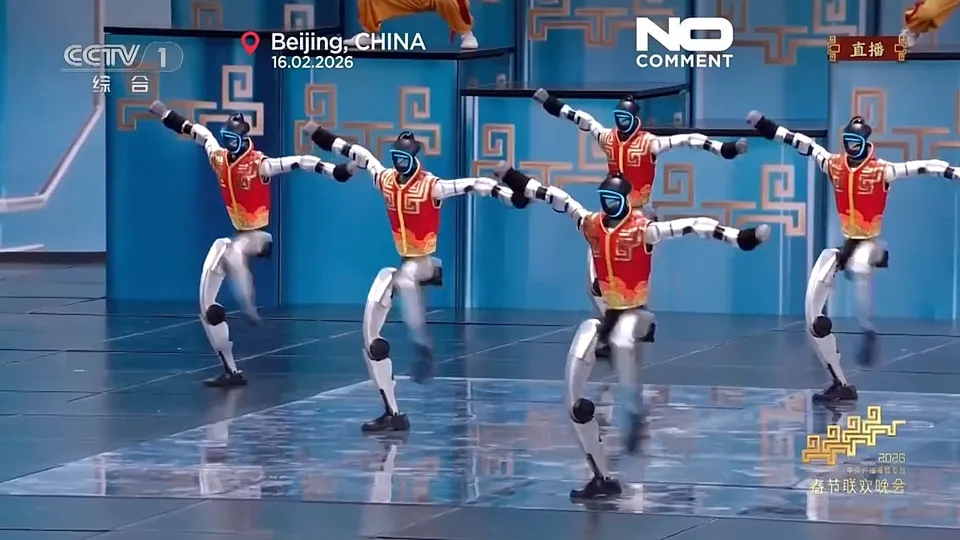
China's Lunar New Year gala showcased a significant technological leap with humanoid robots executing coordinated martial arts and parkour routines. This demonstration highlighted the nation's accelerated progress in developing AI-powered robotics.
The robots performed groundbreaking feats, including continuous freestyle table-vaulting and complex aerial flips, marking a stark improvement from previous, less stable performances.
While the display impressed, experts caution that real-world applications and military potential are still theoretical. Professor Hans Liwång of the Swedish Defence University notes that staged demonstrations may overstate current capabilities, emphasizing the need for robust logic over human-like form in unpredictable environments.
Liwång advises Europe to monitor international advancements closely, learn from competitors, and not start development from scratch. The global humanoid robotics race appears led by China and the United States, with China leveraging manufacturing scale, supply chain integration, and government support.
Companies like Unitree Robotics are already offering advanced humanoid models at competitive price points, signaling a fast-evolving market.