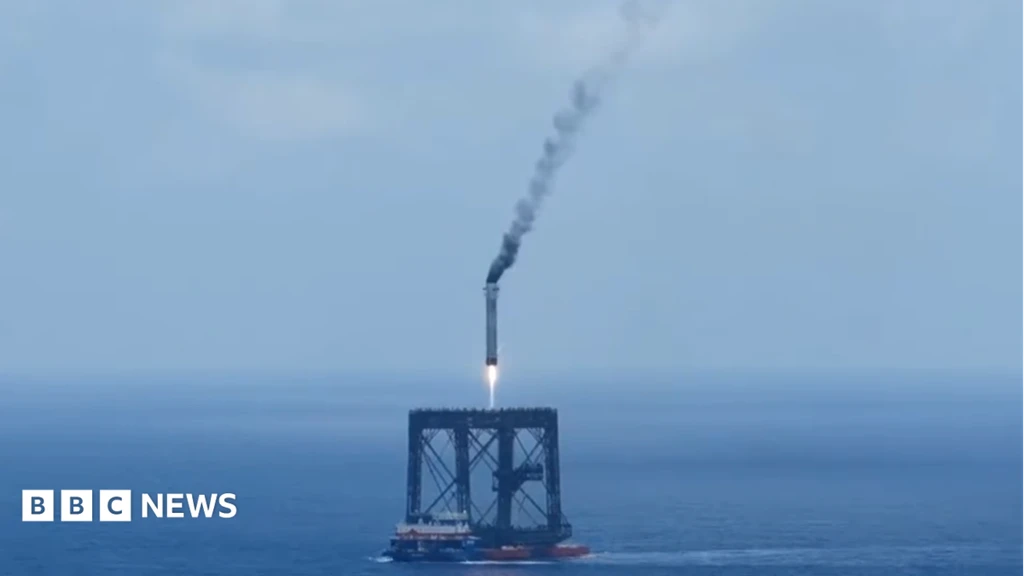
China has successfully landed a reusable rocket for the first time, marking a major breakthrough for the nation's space program.
The Long March 10B rocket launched from Hainan in southern China at 12:15 local time. Six minutes after separating from its upper stage, the booster returned to Earth vertically and was recovered on a floating platform.
This achievement signals China may challenge America's dominance in reusable rockets, currently led by Elon Musk's SpaceX and Jeff Bezos' Blue Origin.
Rockets are typically expendable, making launches expensive. Reusing boosters-the most valuable part-significantly lowers costs for satellite launches and space exploration.
SpaceX first landed a reusable Falcon 9 rocket from orbital flight in December 2015. The Falcon 9 now launches about 150 times yearly.
China made its first reusable rocket recovery attempt in February with a Long March 10A rocket, which completed a controlled descent and splashdown.
The Long March 10B can carry at least 16 metric tons to low-Earth orbit, comparable to SpaceX's Falcon 9. Unlike the Falcon 9, it uses "landing hooks" to catch a net on a floating platform rather than autonomous landing on a ground pad or drone ship.
Shares in Chinese space firms jumped following the news, with China Spacesat and China Satellite Communications each rising by 10%.