China's leading memory chipmaker, Changxin Memory Technologies, is posting explosive growth despite US export controls aimed at curbing Beijing's tech ambitions.
CXMT reported first-quarter 2026 revenue of approximately $7.3 billion, a staggering 700% year-over-year increase. This nearly matches its entire 2025 revenue of $8.6 billion.
The company operates under a complex set of US export restrictions designed to limit China's production of advanced DRAM memory chips. While rival Yangtze Memory Technologies Co. was placed on the Bureau of Industry and Security's Entity List in 2022, CXMT has so far avoided that designation.
Staying off the Entity List provides CXMT with a critical advantage, allowing it to procure certain equipment and components. This has enabled the company to secure a major multi-year server DRAM supply deal with Chinese tech giant Tencent, valued at over 20 billion yuan, or roughly $3 billion.
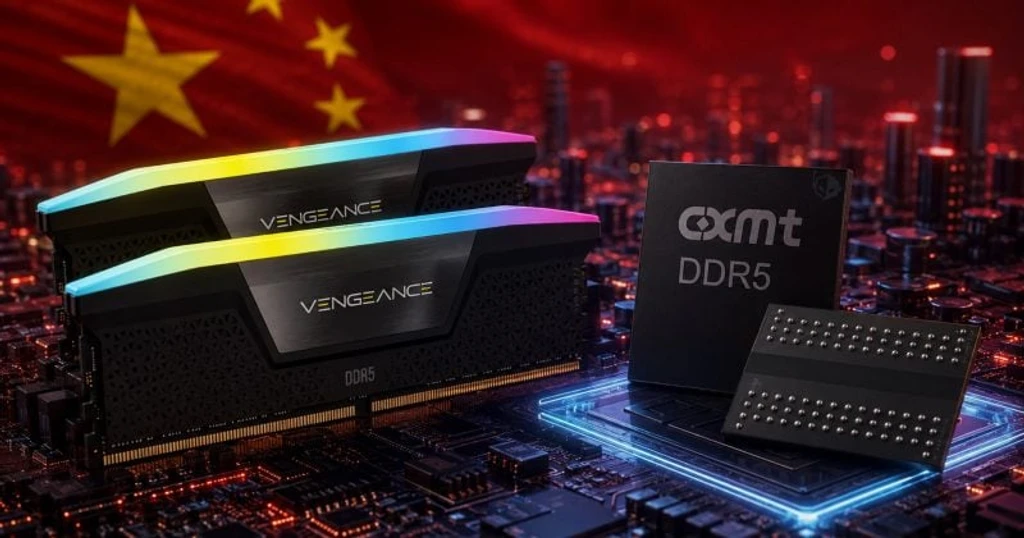
CXMT is also advancing its technology, with demonstrated progress in DDR5 memory production and work on high-bandwidth memory, a key component for AI accelerators. This progress directly challenges the market dominance of South Korea's Samsung Electronics and SK Hynix.
In Washington, the US government is responding. Lawmakers have introduced the MATCH Act, legislation specifically designed to close export control loopholes affecting CXMT and other Chinese chipmakers by targeting their specific production facilities.
For investors in established memory giants like Micron Technology, CXMT's rapid ascent presents a new competitive threat and could pressure global DRAM pricing. The situation forces a strategic question: will the US escalate by adding CXMT to the Entity List, or will it be forced to rethink its entire export control framework?