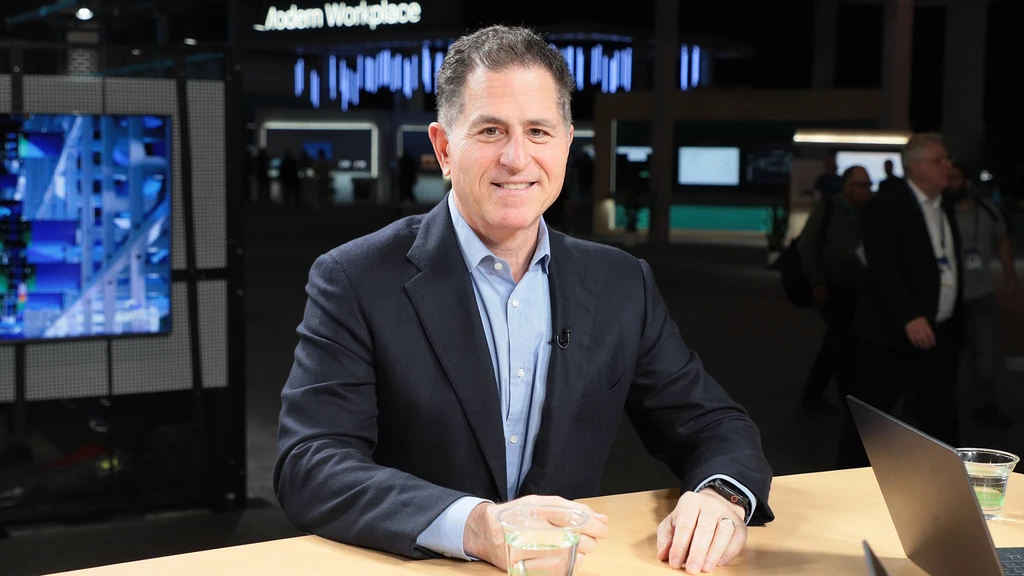
Michael Dell opened the company’s annual gathering in Las Vegas this month with news that Dell Technologies has added 1,000 AI Factory customers in a single quarter, bringing its total base to over 5,000 users. The message: AI adoption is accelerating, and enterprise platforms must be rebuilt to keep pace.
“We’ve got the infrastructure solutions to make it all happen,” Dell told theCUBE. “It’s happening in factories, in retail stores, in hospitals, in laboratories.”
Hybrid Infrastructure Becomes Essential
Dell is targeting hybrid architecture, including partnerships with Advanced Micro Devices (AMD) and Nvidia to deliver processing power on-premises and at the edge. “We believe we have to build out a hybrid platform for our customers - whether it runs at the edge, the core, or in a hyperscaler,” said Melissa Crichton, Dell’s vice president of server and AI solutions.
John Roese, Dell’s global CTO and chief AI officer, emphasized that “tokennomics” is now central to enterprise strategy: “Having a smart, intelligent way to use your hybrid infrastructure to put the right workload in the right place is not just nice-to-have - it’s required.”
The AI-Native Enterprise Operating Model
Dell COO Jeff Clarke argued that every company must become AI-native: “You need to be able to take that utility of intelligence and apply it everywhere. Those who figure that out are advantaged and will win in their respective marketplaces.”
Arthur Lewis, president of Dell’s Infrastructure Solutions Group, said customers who simply drop AI on top of old processes get only 10% to 20% productivity gains. Those who remap workflows and adopt spec-driven development see 10X to 30X improvements.
The Rise of Agent Management
Gartner predicts the average Fortune 500 firm will run over 150,000 AI agents within two years. Dell CIO Doug Schmitt called 2026 “the year of agent management,” noting that Dell is seeing it live in its own supply chain and development. The company is working with Microsoft on SQL Server integrations to help enterprises manage hybrid data and AI agents at scale.
“We built a framework so it doesn’t matter where you’re running these AI models - we can easily integrate with it,” said Bob Ward, principal architect at Microsoft.