
Google has developed a novel AI system, Groundsource, capable of predicting urban flash floods up to 24 hours in advance. This breakthrough addresses a critical data gap that has long hindered effective flood forecasting.
Flash floods pose a significant threat, striking rapidly and disproportionately impacting urban areas. Historically, the lack of granular historical data made accurate predictions extremely difficult.
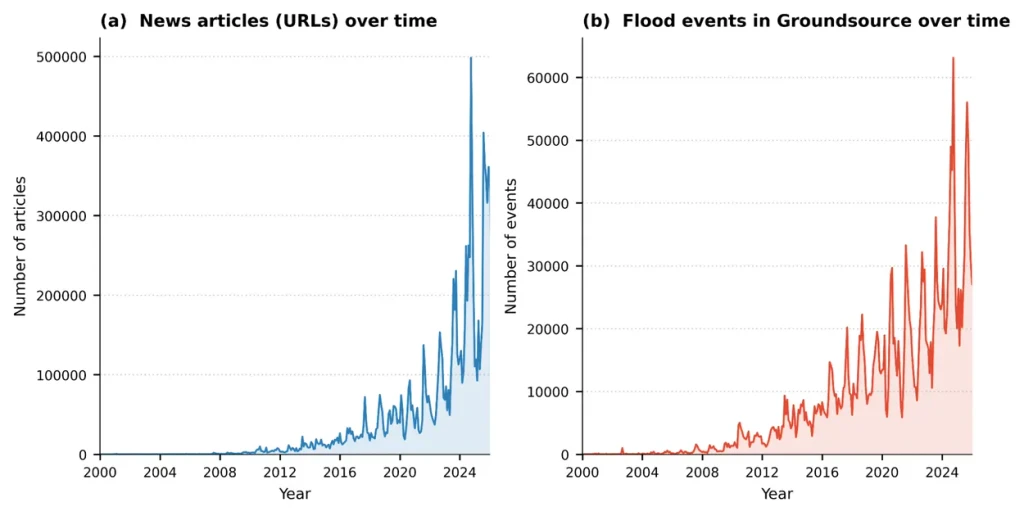
Groundsource utilizes Google's Gemini AI to scan millions of news articles published since 2000. By extracting flood event details and geolocating them, the system has compiled a dataset of 2.6 million historical flash floods across over 150 countries. This extensive dataset is now publicly available.
The gathered data has been instrumental in training a new AI model designed to forecast the likelihood of flash floods in urban environments within the next 24 hours. These predictions are being integrated into Google's Flood Hub, a platform already used to alert billions about riverine flooding.
Unlike river flooding, which can be tracked by physical gauges, urban flash floods occur too quickly and locally for traditional sensors. Google's solution treats news reports as the crucial missing sensor data.
The trained AI model, an LSTM neural network, analyzes hourly weather forecasts alongside local factors such as urbanization density and topography. It generates a simple flood risk assessment: medium or high for urban areas with a population density exceeding 100 people per square kilometer.
While the system has limitations, covering specific areas and not detailing flood severity, its efficacy has been demonstrated. During beta testing, a regional authority received an alert from the Flood Hub, confirmed a flood event, and successfully deployed humanitarian aid.