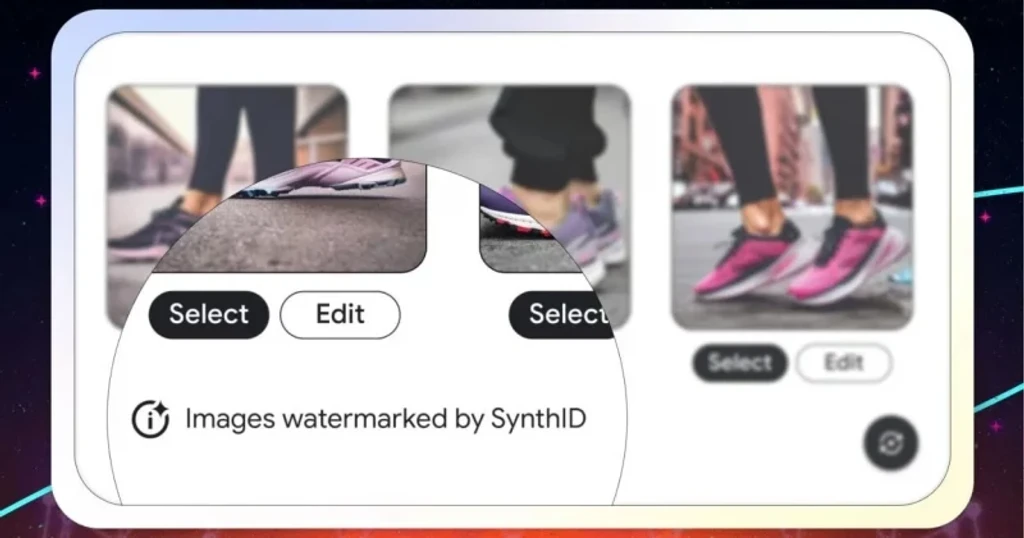
Google has convinced some of its biggest competitors to adopt its AI watermarking system. At Google I/O 2026, the company announced that OpenAI, Kakao, and ElevenLabs are integrating SynthID, Google's imperceptible watermarking technology, into their own platforms.
The partnerships represent a rare moment of cross-industry alignment, where companies normally competing for market share are instead collaborating on a shared problem: proving whether content was made by a human or a machine.
SynthID has already been applied to over 100 billion images and videos. For audio, the equivalent of 60,000 years of content has been watermarked. The technology works by embedding signals into AI-generated content that are invisible to humans but detectable by verification tools. These signals survive common editing operations like cropping, compression, and color adjustment.
OpenAI is specifically integrating SynthID watermarking into images generated through ChatGPT, Codex, and its API, and is previewing a public verification tool. NVIDIA had already begun deploying SynthID in 2025. The addition of Kakao extends the technology's reach into Asian markets.
Google is also expanding where users can verify content. SynthID and C2PA Content Credentials verification are being integrated into Google Search, Chrome, and the Gemini app. C2PA creates a chain of custody for digital media, recording origin and modifications. By combining embedded watermarks with metadata, Google is layering two verification approaches.
For investors, the convergence around SynthID signals where regulatory and commercial pressure points are heading. Governments worldwide have been inching toward requiring provenance tracking for AI-generated content. Google is effectively giving away a strategic technology to rivals, but if SynthID becomes the default watermarking layer, Google controls the standard. OpenAI adopting SynthID rather than building a competing system suggests the verification space is consolidating faster than expected.