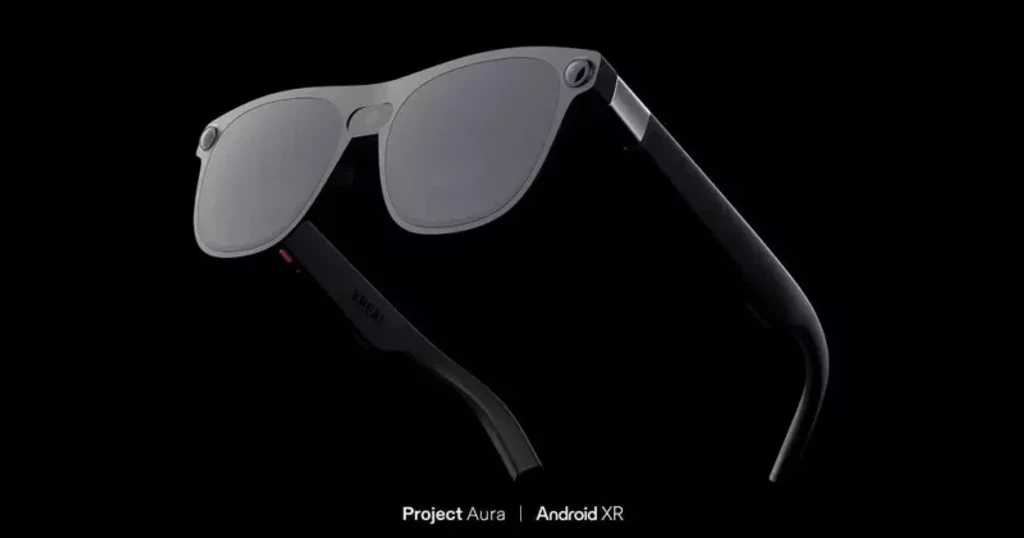
Google has introduced Project Aura, a pair of smart glasses developed with XREAL, marking its most significant move into wearable spatial computing. These glasses run on Android XR, the same operating system used by Samsung's Galaxy XR headset, inheriting a full app ecosystem from launch.
Aura features optical see-through displays with a 70-degree field of view, housed in a frame weighing about 90 grams. A pocket-sized compute puck, connected by wire, handles processing and battery duties, powered by Qualcomm's Snapdragon XR2+ Gen 2 chip. The software supports immersive spatial applications, Windows desktop streaming, and AI features like real-time translation and navigation overlays.
Google has partnered with Samsung, Warby Parker, and Gentle Monster to expand its XR and AI glasses ecosystem. Project Aura is set for a 2026 launch, targeting episodic use cases such as navigation, translation, and reference tasks.
Unlike previous attempts like Google Glass, which faced a short-lived hype cycle, the current effort benefits from a robust ecosystem: Samsung as hardware partner, Qualcomm providing purpose-built silicon, and millions of Android developers. While no crypto integration is present initially, the Android XR platform opens possibilities for decentralized applications adapted for spatial computing.