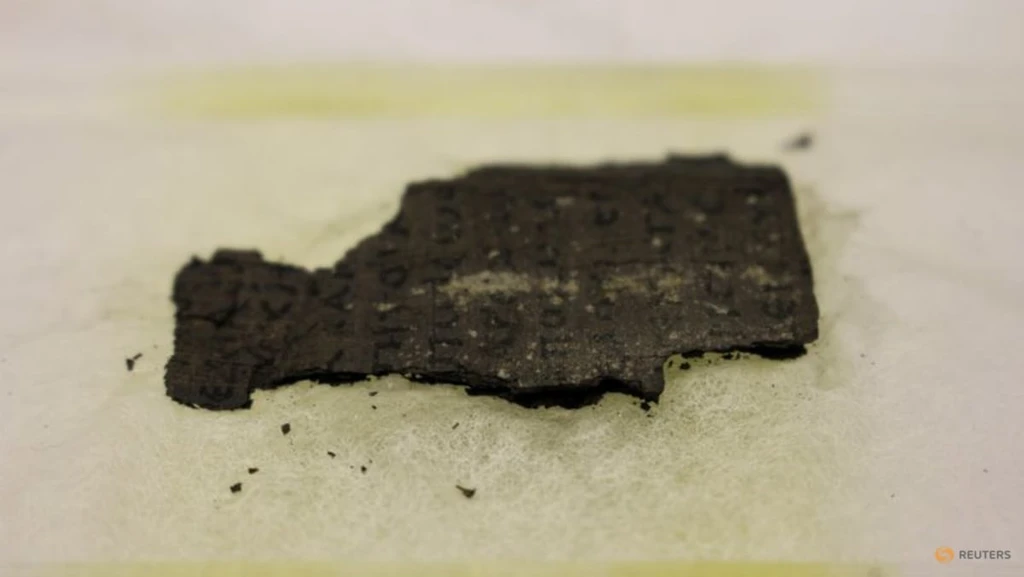
Researchers have achieved the first complete reading of a Herculaneum scroll carbonised by the eruption of Mount Vesuvius in 79 AD.
The breakthrough, announced Thursday in Naples, used high-resolution scans and computational techniques to virtually unwrap the fragile papyrus without physical contact. The Vesuvius Challenge, which promotes new technologies to decipher the texts, revealed 70 columns from Philodemus’s “On Vices, Book 1.” An additional 20 columns were recovered from a document dated 200-300 BC - the oldest scroll yet opened - exploring ethics, arts, and human behavior.
“With virtual unwrapping, we are no longer forced to choose between preserving and reading these extraordinary artefacts,” said lead papyrologist Federica Nicolardi. In the past 24 hours, the team unwrapped an entire scroll, yielding 140 columns of new text.
The project’s founding sponsor, tech executive Nat Friedman, announced all data, code, and models will be placed online and a $1 million prize will go to whoever first reads any other complete scroll. Co-founder Brent Seales of the University of Kentucky believes every scroll in the collection will eventually be read. Nearly 600 unopened scrolls remain, and large areas of the ancient villa are still unexcavated.