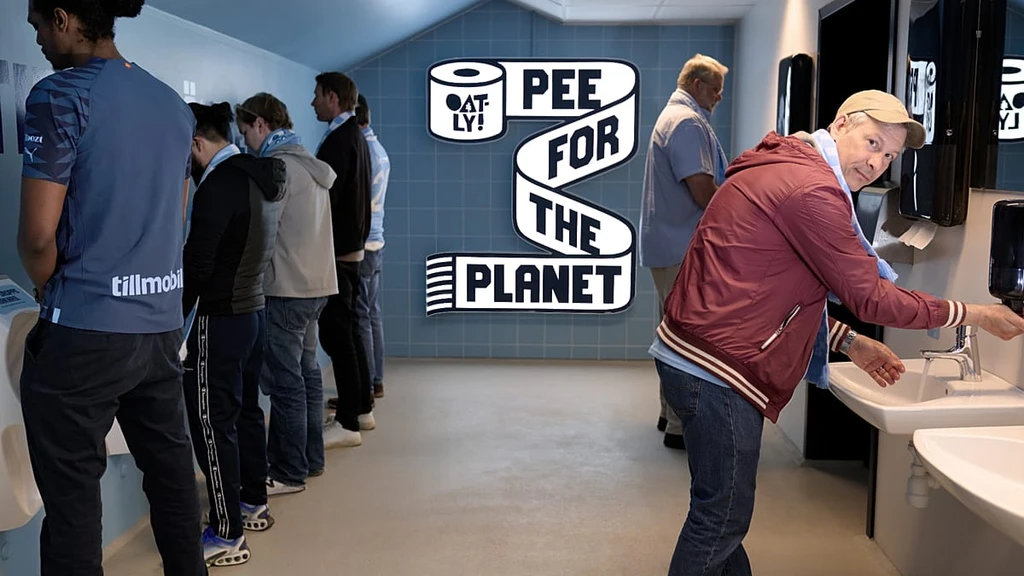
Swedish football fans are joining an unconventional tournament this year: peeing for the planet.
On Sunday, Malmö FF's Eleda Stadion will open its toilets to collect 1,000 liters of human urine. The goal is to reduce Sweden's dependence on imported fossil fuel-based synthetic fertilizer, which generates 1.13 billion tonnes of CO2 annually-more than the global aviation sector.
Geopolitical tensions, including Iran's blockade of the Strait of Hormuz, have disrupted about a third of global fertilizer trade, threatening food security.
Human urine is rich in nitrogen, phosphorus, and potassium-key nutrients also found in synthetic fertilizers. The Swedish University of Agricultural Sciences, Oatly, Malmö FF, and Sanitation360 are partnering to research urine's viability as a circular, safe fertilizer.
“It’s about making use of a resource we currently waste,” says Professor Björn Vinnerås. “Collecting and reusing urine is no stranger than using manure from farm animals.”
The stadium has been fitted with 15 urinals and one collection toilet. From Sunday through Malmö FF’s final home match on 29 November, the project will test technology, logistics, hygiene, and public acceptance.
Researchers estimate urine could replace up to 30% of Sweden's synthetic fertilizer. If successful, the approach could reduce wastewater treatment burdens and help normalize food grown with circular nutrients.