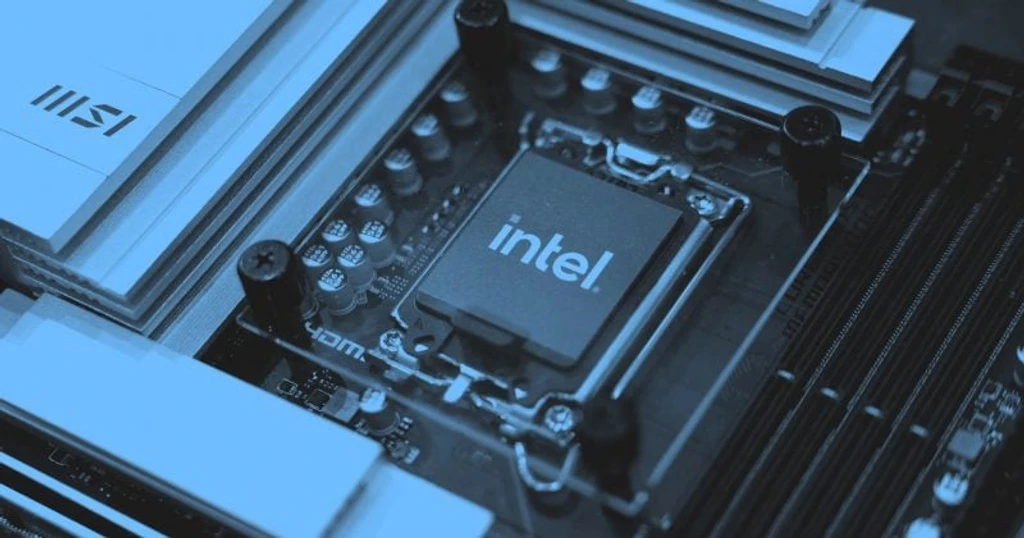
Intel is preparing to release a new AI chip before the end of 2026, built around lower-cost memory and improved thermal-management technology. The move represents the company’s clearest attempt yet to undercut the premium pricing that has defined the AI accelerator market.
The chip in question is the Crescent Island GPU, based on Intel’s Xe3P architecture. It will feature 160 GB of LPDDR5X memory, a choice that trades some raw bandwidth for significantly lower costs compared to the high-bandwidth memory (HBM) stacks used by Nvidia and AMD in their flagship accelerators.
Customer sampling is expected in the second half of 2026, with the chip aimed squarely at AI inference and edge computing rather than the training workloads where Nvidia’s H100 and B200 GPUs reign supreme. The thermal-management improvements matter more than they might sound. AI chips generate enormous heat, and cooling them is one of the largest operational costs in data centers. Better thermal design means lower electricity bills, denser server configurations, and fewer headaches for the engineers who keep these facilities running.
Intel’s Data Center and AI segment pulled in $5.1 billion in revenue during Q1 2026, a 22% increase year-over-year. Intel’s stock has climbed roughly 225% year-to-date, driven by renewed confidence in the company’s AI strategy.
Intel’s lower-cost approach is a calculated bet against the prevailing strategy in AI hardware. By focusing on inference and edge deployments with cheaper components, the company is targeting a market segment that is enormous but underserved. Not every company running AI workloads is OpenAI or Google. Thousands of mid-sized enterprises need to deploy AI models without spending millions on Nvidia hardware.