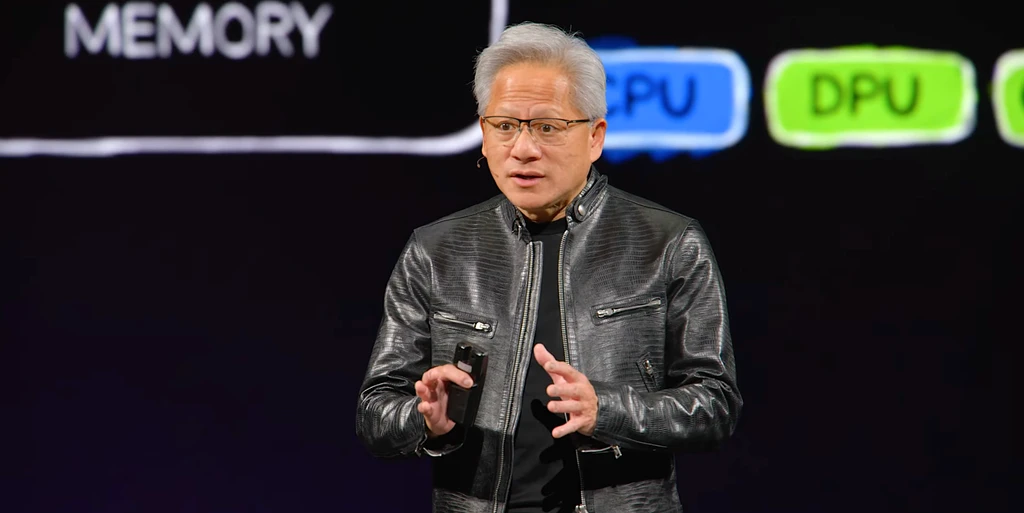
Nvidia CEO Jensen Huang, speaking at GTC Taipei 2026, declared that we have entered the 'age of agents'-where AI systems don't just answer questions but observe, reason, plan, and act across distributed infrastructure.
Huang dismissed fears of AI job destruction, arguing that massive productivity gains mean companies will hire more developers, not fewer. He cited data showing software output has nearly tripled since 2023 while the developer headcount remains flat.
The core economic unit, Huang said, has shifted: 'Tokens are now profitable units of revenue.' Every efficiently generated token is incremental profit, making data center design a financial engineering exercise. He warned that enterprises must maximize tokens per watt or risk falling behind permanently.
Agentic AI represents a new application model. Huang described an 'agent' as a large language model inside a 'harness' that orchestrates tools, memory, and reasoning to own entire business processes end-to-end.
On infrastructure, Huang introduced the 'AI factory'-single sites heading toward 1 gigawatt with capital costs reaching $100 billion. Nvidia's DSX blueprint helps customers design and operate these facilities using digital twins.
Finally, Huang unveiled Vera Rubin-a pod-scale system integrating next-generation GPUs, Vera CPUs, and networking-and the Vera CPU, purpose-built as a 'conductor' for agents. 'The CPU is now the conductor, and the GPU is the orchestra,' he said.