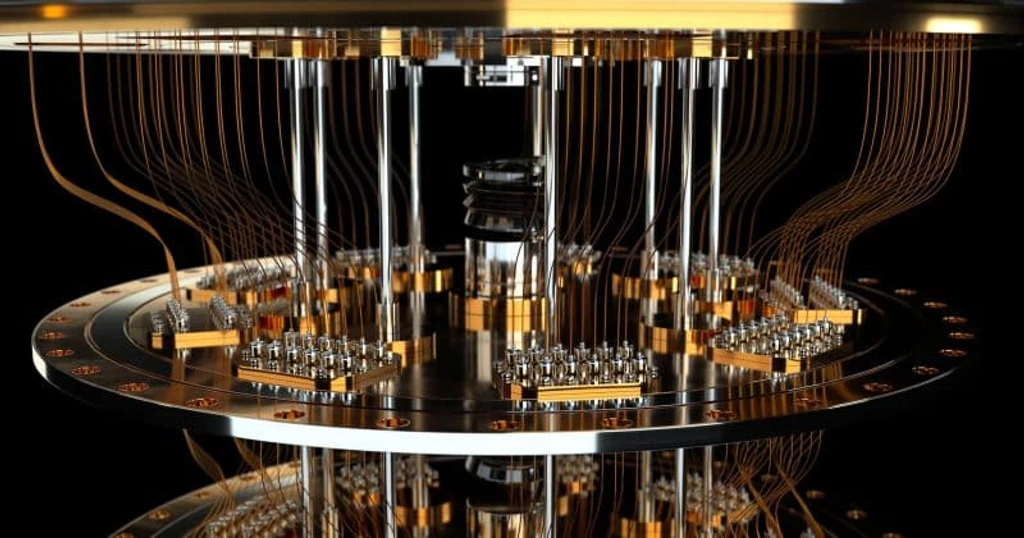
Microsoft’s latest quantum computing announcement faces sharp criticism from physicists. The company’s paper in Nature on February 19, 2025, describes its Majorana 1 chip, but critics say it fails to prove the existence of Majorana zero modes, the topological qubits essential to the design.
Winfried Hensinger (University of Sussex) and Henry Legg (University of St Andrews) argue the paper focuses on device characterization, not experimental evidence. Legg has published preprints questioning Microsoft’s Topological Gap Protocol, citing data quality and analytical flaws.
The skepticism echoes past controversies: Microsoft retracted related papers in 2018 and 2021. After nearly 20 years and billions invested through its Station Q program, follow-up chip Majorana 2 announced in 2026 still lacks validated physics.
Investor enthusiasm for quantum stocks cooled after the initial spike. Google and IBM pursue superconducting qubits, while Microsoft’s topological approach remains theoretical. Until independent labs confirm Majorana zero modes, commercial viability is distant.