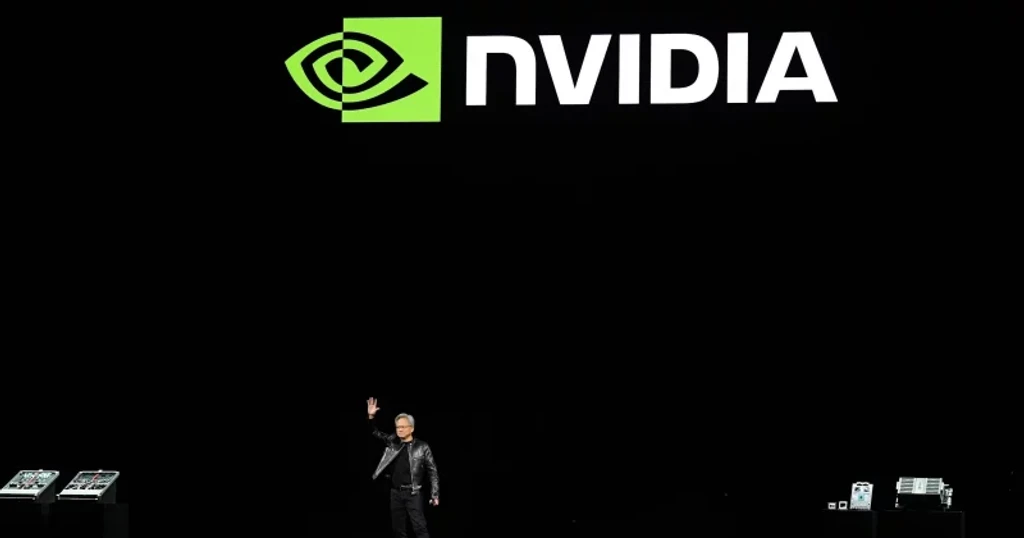
Nvidia continues to redefine its own benchmarks. The company's Blackwell A.I. platform generated approximately $11 billion in revenue during Q4, marking the fastest product ramp in its history.
CFO Colette Kress described demand as "staggering," citing hyperscalers, model makers, A.I. cloud providers, and sovereign customers as primary drivers. Total Q4 revenue reached $39.3 billion, with Blackwell alone accounting for over a quarter of the quarterly haul. Annual revenue doubled to $130.5 billion.
Analysts noted that Blackwell sales significantly exceeded forecasts, underscoring Nvidia's pricing power in a market with scarce competition. Microsoft reported more than 2x performance improvements with Blackwell compared to prior GPU generations, providing cloud providers a clear business case for upgrades.
The initial wave of GPU demand was driven by training large language models. Now, inference demand is joining and often surpassing it. Inference refers to the compute required when models are used at scale for queries, code completion, and predictions-a persistent, recurring expense that grows with adoption.
For investors, the question is whether this signals a durable structural shift or a temporary boom. Evidence points toward durability. The buyer base for Blackwell is notably diverse, including sovereign A.I. initiatives where governments treat compute capacity as a strategic asset. While AMD and custom silicon from Google and Amazon present competition, none have meaningfully dented Nvidia's market share.
The risk to watch is margin compression as Blackwell production scales, but Nvidia's history of staying ahead with next-generation architectures suggests continued strength.