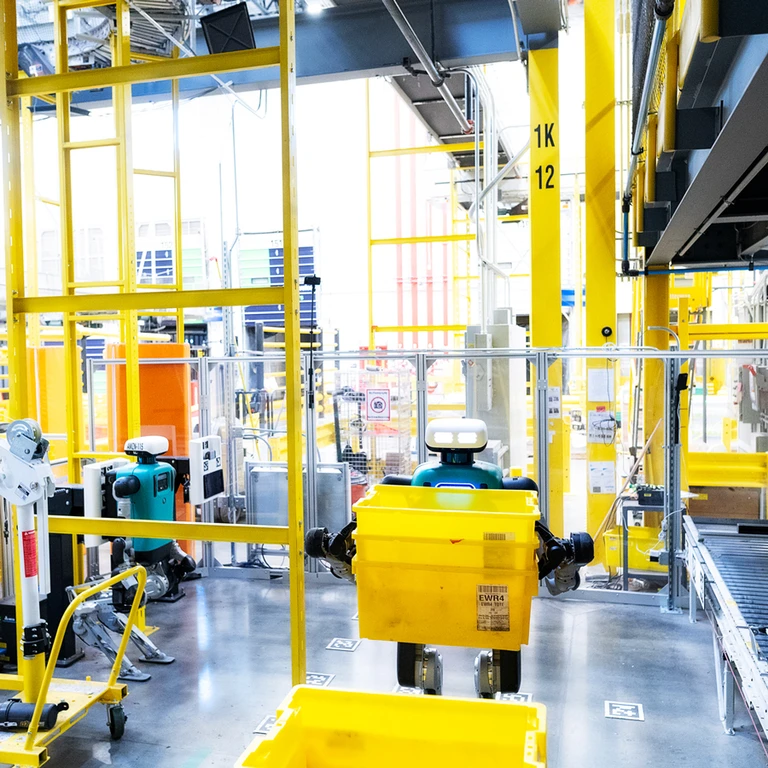
Nvidia Corp. announced Halos for Robotics, the industry's inaugural framework designed for robotic safety systems, comprising the construction, testing, and management of AI-powered robotics applications.
Automation in industrial environments has transitioned from rigid operations to intelligent systems capable of navigating dynamic spaces and collaborating with humans. As these systems integrate closer to human activities, safety becomes paramount.
Agility Robotics, a pioneer in humanoid robotics, is the first to implement Nvidia's Halos, enhancing the safety of its robots deployed in factories for clients like Amazon and Toyota. Chief Executive Peggy Johnson emphasized that safety must be inherent in humanoids to deliver significant value.
Halos integrates several components vital for robotic safety, including the IGX Thor AI compute and Holoscan Sensor bridge, ensuring real-time responsiveness. The system encompasses Halos OS for safety software and Halos Core, supporting safety operations and external camera integration to refine robot behavior.
Additionally, the Halos AI Systems Inspection Lab aims to lead safety validations and third-party certifications, collaborating with major safety entities such as TÜV Rheinland and UL Solutions.
In 2025, the need for safety in robotics intensified as public and industrial demands grew. Reports indicate that unpredictable robot behaviors pose significant risks despite prior safety tests. AI regulations are expected to evolve, with the European Union Machinery Regulation of 2027 addressing machines exhibiting 'self-evolving behavior.'
Nvidia's vision positions Halos as the definitive standard for AI safety in robotics, akin to the 'Intel Inside' branding for tech products.