Jensen Huang has a gift for turning earnings calls into pep rallies. Nvidia’s latest quarterly results didn’t just beat expectations-they sent a shockwave through Asian tech markets, lifting shares of semiconductor manufacturers, robotics firms, and component suppliers across the region.
The catalyst: Nvidia posted quarterly revenue of $22.1 billion, a 265% jump year-over-year. Data-center revenue alone hit $18.4 billion, up 409% from the same period last year. Those numbers are driven almost entirely by insatiable demand for AI GPUs, and Huang used the moment to paint an even bigger picture.
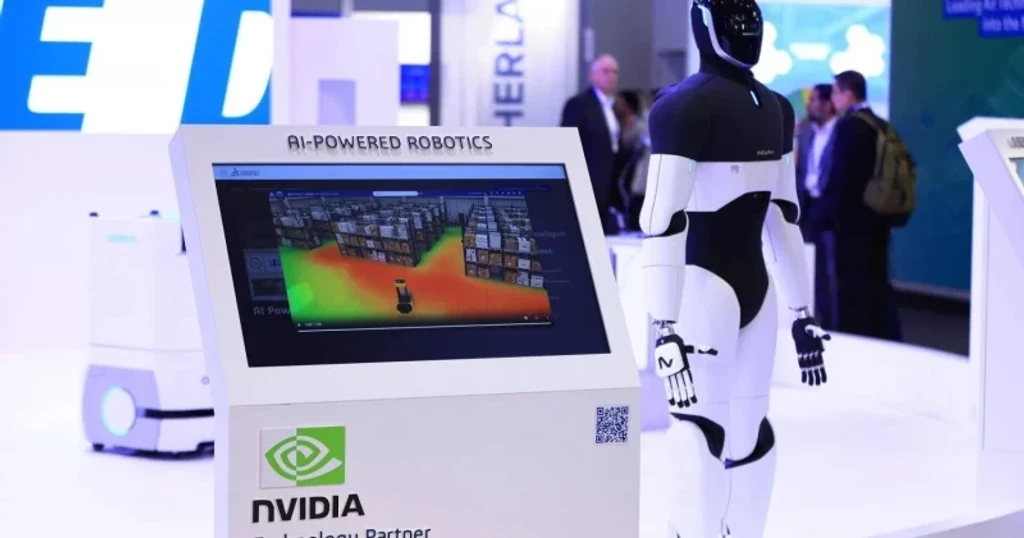
Huang is now pushing what he calls “physical AI,” covering robots, autonomous machines, automated factories, and AI-integrated devices that operate in the real world. Nvidia wants its chips powering not just software that thinks, but hardware that moves. The company has been building platforms like Nvidia Isaac for robotics development and Omniverse for digital-twin simulations.
Huang specifically praised China’s capabilities in robotics and microelectronics, acknowledging that the US robotics industry is deeply dependent on Asian manufacturing. The rally swept through chipmakers, contract manufacturers, sensor producers, and automation specialists across Taiwan, South Korea, Japan, and China.
By positioning robotics and physical AI as the next major growth vector, Nvidia signals the AI capital expenditure cycle has years of runway. For Asian tech firms, they're not competing with Nvidia-they're supplying it. Every robot running on Nvidia's Isaac platform needs sensors, actuators, and processors that largely come from Asian factories.
The ripple effects extend to crypto markets. AI-themed tokens have become proxies for AI sentiment, with traders treating them as leveraged bets on the broader AI narrative. Tokens with genuine utility-like those powering decentralized GPU rental networks-have a plausible connection to the same demand drivers Nvidia is capitalizing on.
The difference this time: Nvidia is backing up the narrative with actual revenue, not just slide decks. A 409% increase in data-center revenue is a financial reality that suppliers, partners, and speculators are now building their strategies around.