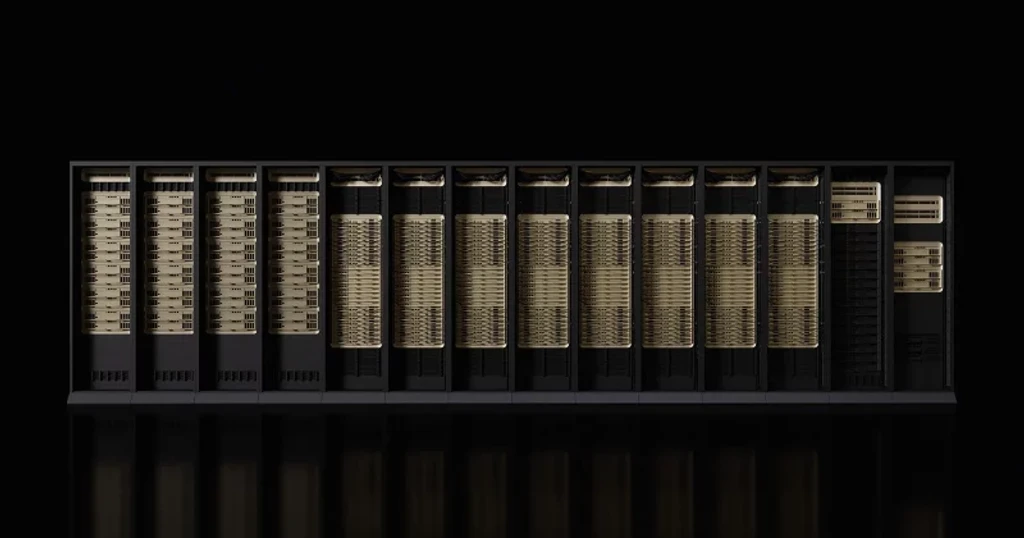
Nvidia's Vera Rubin platform, the successor to the Blackwell architecture, is slated to drive a surge in AI server demand starting in the second half of 2026. With fiscal 2026 revenue hitting $215.9 billion-up 65% year-over-year-the Rubin lineup is engineered to sustain that explosive growth.
Rubin delivers a 10x reduction in inference token costs and requires 4x fewer GPUs for training mixture-of-experts models compared to Blackwell. Performance-per-watt improves up to 50-fold. CEO Jensen Huang calls it the core of a $3-4 trillion global AI factory build-out.
Mass production of six new chips is underway at TSMC. AWS, Google Cloud, and Microsoft Azure are all preparing to integrate Rubin instances in H2 2026, with Microsoft reportedly planning hundreds of thousands of units.
For investors, the ramp pressures TSMC's advanced packaging capacity and tightens supply for rivals like AMD and custom chips from Google and Amazon. Nvidia's CUDA software ecosystem remains its competitive moat. The major risk: any production delays at TSMC or supply chain hiccups could push timelines into 2027, opening a window for competitors.