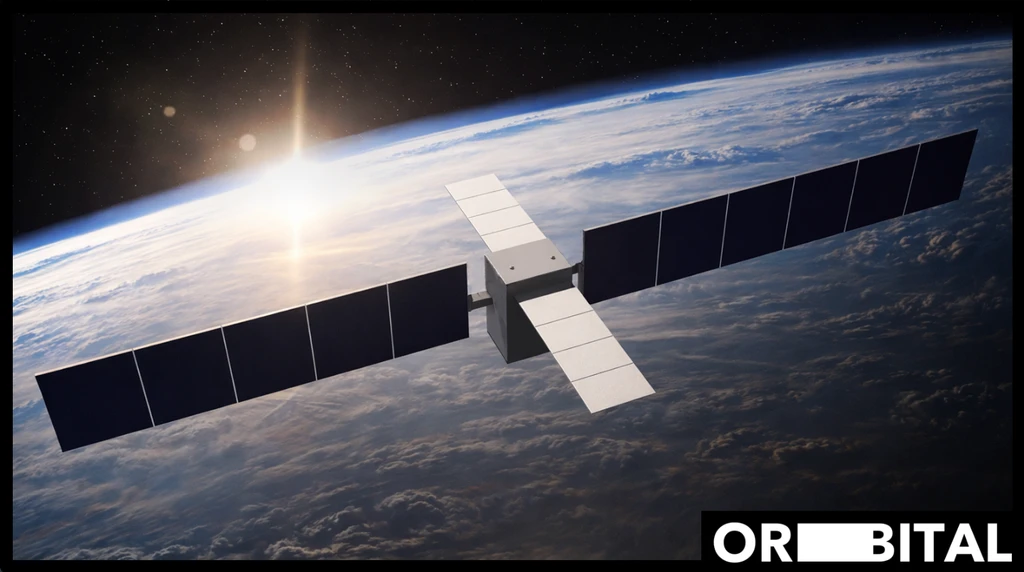
Startup Orbital Inc. has closed a funding round led by Andreessen Horowitz's a16z Speedrun. The capital will finance its "Orbital-1" test mission, designed to prove the concept of its orbital AI data center technology.
Orbital aims to tackle the AI industry's immense energy demands, which are straining terrestrial power grids. The company proposes building data centers in low-Earth orbit, powered entirely by solar energy, to bypass energy constraints and cooling challenges.
Co-founder and CEO Euwyn Poon highlighted the urgency, stating that space-based infrastructure offers continuous solar power and efficient cooling through radiative heat transfer into the vacuum. Orbital's plan involves a constellation of independent nodes housing Nvidia-powered servers, designed for AI inference workloads.
Orbital plans its first satellite launch on a SpaceX Falcon 9 rocket in April 2027. This mission will validate its radiation protection systems and GPU operations in space, crucial for commercial AI inference. The company is also establishing an R&D facility in Los Angeles, dubbed Factory-1, for satellite manufacturing.
Addressing challenges like radiation and "bit flips," Orbital focuses on ground-based testing and designing satellites for replacement rather than repair. This approach, coupled with controlled deorbit, positions the company's model as potentially more environmentally friendly than terrestrial data centers.