
OpenAI has unveiled GPT-Rosalind, its first domain-specific AI model, named after pioneering chemist Rosalind Franklin. This specialized reasoning model targets biology, drug discovery, and translational medicine, aiming to streamline the lengthy drug development process.
GPT-Rosalind is engineered to assist scientists by exploring more possibilities, identifying overlooked connections, and generating hypotheses faster. Benchmarks indicate strong performance, with GPT-Rosalind achieving top scores on bioinformatics tasks and outperforming its predecessor, GPT-5.4, in life science-specific applications.
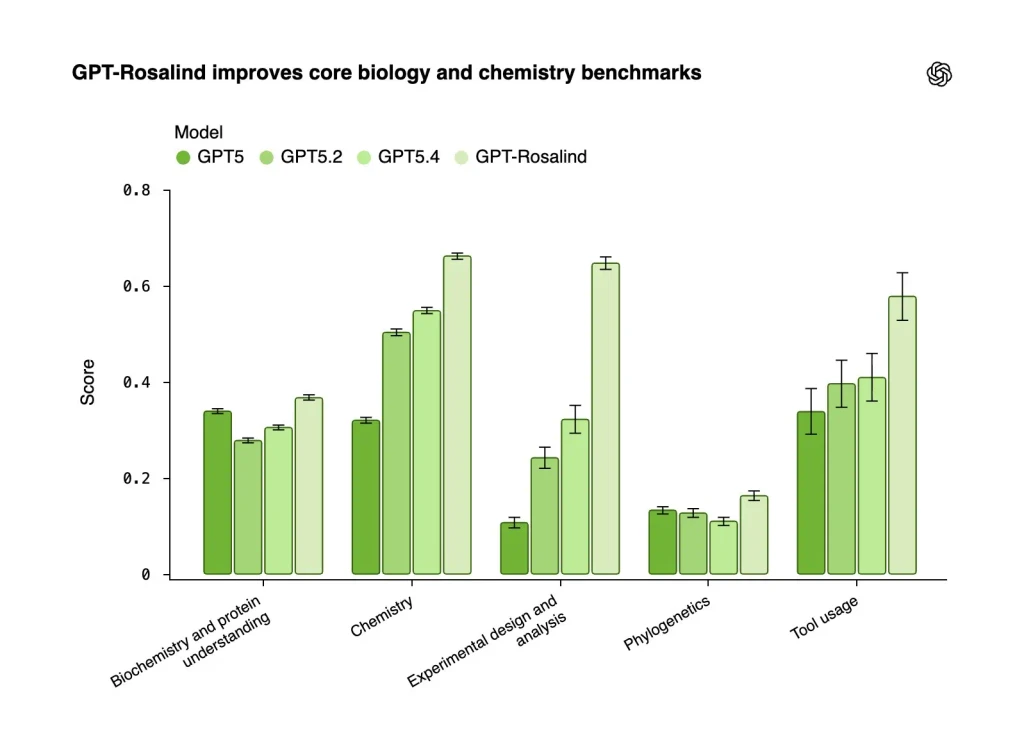
OpenAI has partnered with Dyno Therapeutics to evaluate the model's capabilities, particularly in sequence prediction and generation tasks, where it has shown results superior to human experts.
Despite its potential, OpenAI's lead for life sciences, Joy Jiao, emphasizes that Rosalind is a research acceleration tool, not an autonomous drug creator. The company also released a free Life Sciences research plugin for Codex, connecting to over 50 scientific databases and tools.
Leading pharmaceutical and biotech companies, including Amgen, Moderna, and Thermo Fisher Scientific, are among OpenAI's initial customers. A research collaboration with Los Alamos National Laboratory is also underway for AI-guided protein and catalyst design.
Access to GPT-Rosalind is currently restricted to U.S. enterprises, subject to a qualification and safety review. This limited rollout addresses rising biosecurity concerns and calls for tighter controls on AI training data within the life sciences sector, particularly regarding pathogen design risks.