
The burgeoning field of AI is introducing "agentic payments," a concept where artificial intelligence agents, not humans, will conduct transactions. This new wave of internet commerce aims to build automated payment rails that traditional financial systems find challenging.
McKinsey projects AI agents could facilitate $3 trillion to $5 trillion in global commerce by 2030. Enter x402, an agentic payments protocol supported by a consortium including Coinbase. Its ambitious goal is to embed stablecoin payments directly into the internet's communication layer, enabling automatic software-to-software charges.
Supporters believe x402 can foster new internet businesses centered on automated micropayments, a niche traditional payment processors struggle to accommodate due to underwriting complexities and high fees on sub-cent transactions.
The protocol's name references HTTP 402, "Payment Required," an early internet status code for a future with built-in web payments. However, the technology is still in its nascent stages, with limited on-chain adoption.
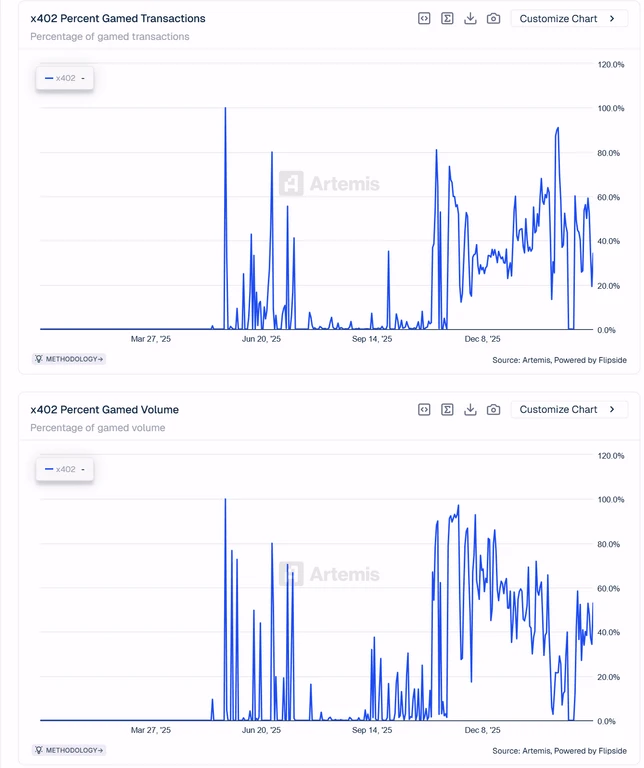
Onchain analysis reveals that a significant portion of observed x402 transactions are artificial, often involving self-dealing or wash trading, rather than genuine commerce. While network testing and experimental use contribute to this activity, analysts suggest these "gamed" transactions should decline as the network matures.
Despite an estimated $7 billion ecosystem valuation, the daily payment volume remains around $28,000, highlighting a disconnect. This valuation is partly inflated by Chainlink's LINK token, which predates x402 and has broader infrastructure roles.
Coinbase Developer Platform's Head of Engineering, Erik Reppel, noted that open standards like x402 invite experimentation, leading to unintended uses during early development. "At its core, it’s a micropayments rail," an Artemis analyst stated, emphasizing its potential for pay-per-use APIs and agent coordination.
Past attempts at similar micropayment systems in crypto have faced adoption challenges. The vision of agentic commerce is advancing, but the economy supporting it may require more time to develop. Experts predict that while agentic commerce may be overestimated in the short term, its long-term potential is significant.