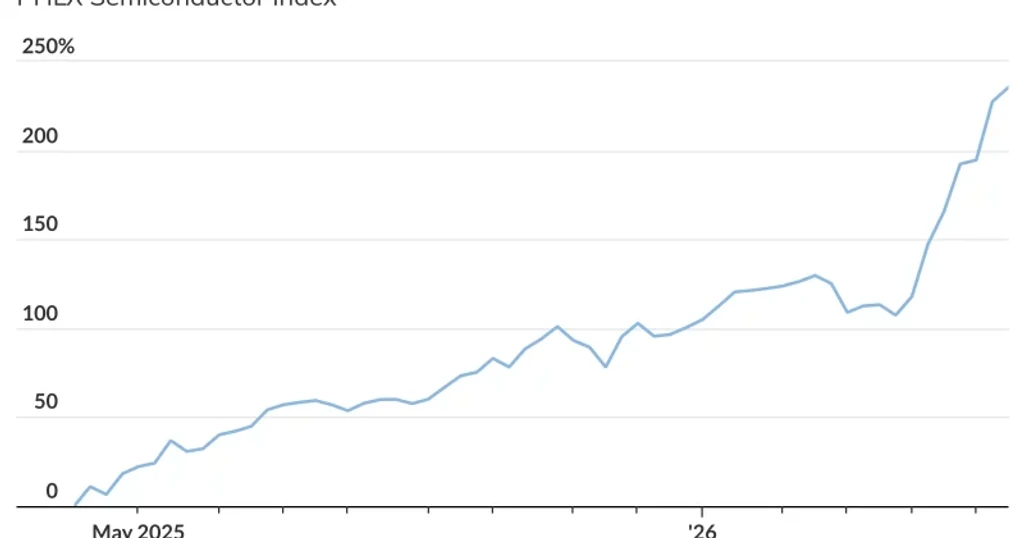
The PHLX Semiconductor Index, known as SOX, has posted the best start to a calendar year in its history. Surging roughly 78-82% year-to-date through late May, the collective market value of its component companies now sits at approximately $5.7 trillion.
The previous record for the SOX's best start was set in 1995, when chip stocks climbed 62% during the first 100 trading days. That record stood for more than three decades.
Two forces are driving this rally: insatiable demand for AI infrastructure and persistent shortages in memory chips. This surge is not primarily driven by crypto mining or blockchain hardware demand; the engine here is artificial intelligence.
Sandisk has surged 570% year-to-date, riding the memory shortage wave. Intel has more than tripled. AMD's market capitalization now exceeds that of JPMorgan Chase. The SOX tracks 30 major US-listed semiconductor firms, including Nvidia, Broadcom, Micron Technology, TSMC, and ASML.
The $5.7 trillion in collective market value added since January represents a massive reallocation of capital toward the semiconductor sector. However, concentration risk is real. The SOX's gains are heavily influenced by mega-cap companies, and any stumble by one of those leaders can ripple through the entire space.
For crypto-adjacent investors, the implications are indirect but worth tracking. The same chips powering AI workloads share architectural DNA with hardware used in mining operations and decentralized compute networks. When chip supply tightens and prices rise across the board, it affects the economics of proof-of-work mining, GPU-based rendering networks, and any crypto project that depends on physical hardware.