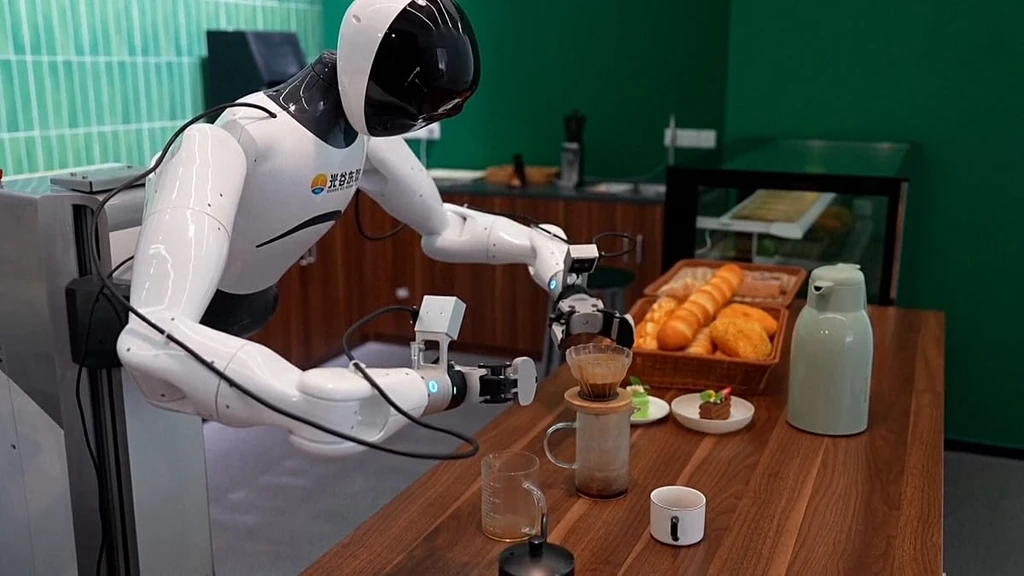
In Wuhan, China, a new approach to artificial intelligence is taking shape at a "robot school." Humanoid machines are being trained to master everyday tasks, from making coffee to performing chores, through a unique process involving virtual reality.
Engineers guide the robots' movements in real-time using VR equipment. Trainers wear VR glasses and controllers, mirroring the robots' actions. This data is uploaded to the cloud, forming datasets that the robots learn from. "I feel a great sense of accomplishment when I get it to complete the task, just like teaching my own child," said AI robot trainer Qu Qiongbin.
The robots practice in simulated real-world environments, including living rooms and factory settings. Trainers repeat actions hundreds of thousands of times to build the extensive datasets needed for skill acquisition. "We train and teach robots by creating realistic, one-to-one scenarios," explained project leader Yang Xinyi.
The ultimate goal is to fast-track the development of humanoid robots capable of operating in diverse real-world settings. Some of these machines are already on public display, responding to commands and executing simple tasks.