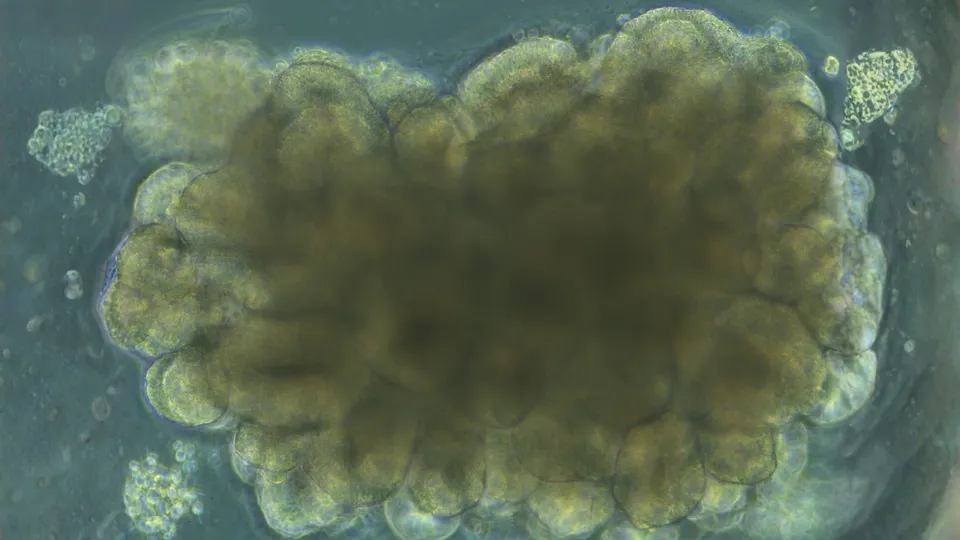
Scientists have demonstrated that living neural circuits grown in a lab can be trained to solve complex problems. Researchers used cortical organoids, developed from mouse stem cells, and subjected them to a closed-loop system providing electrical feedback based on performance.
The organoids were tasked with controlling a virtual cart to balance an unstable pole - a classic engineering benchmark known as the cartpole problem. This task requires constant, fine-grained adjustments, unlike simpler pattern recognition. The organoids' responses to electrical stimulation were interpreted as directional forces to move the virtual cart.
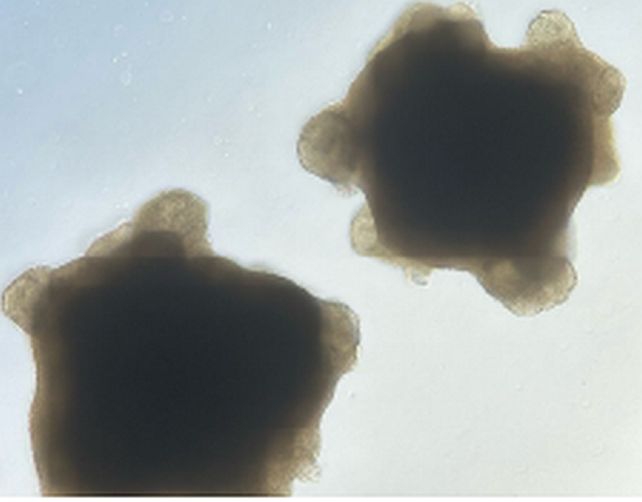
Through adaptive feedback, where the system adjusted stimulation based on past performance, the organoids significantly improved their ability to balance the pole. Organoids receiving this adaptive coaching achieved a proficiency threshold in 46 percent of cycles, a stark contrast to those receiving no feedback (2.3 percent) or random feedback (4.4 percent).
This breakthrough offers a novel method for studying how neurological diseases impact the brain's capacity for learning and plasticity. While the organoids "forgot" their training after about 45 minutes of inactivity, researchers aim to enhance memory and further understand fundamental principles of neural adaptation. The goal remains advancing brain research and disease treatment, not replacing conventional computing with lab-grown tissues.