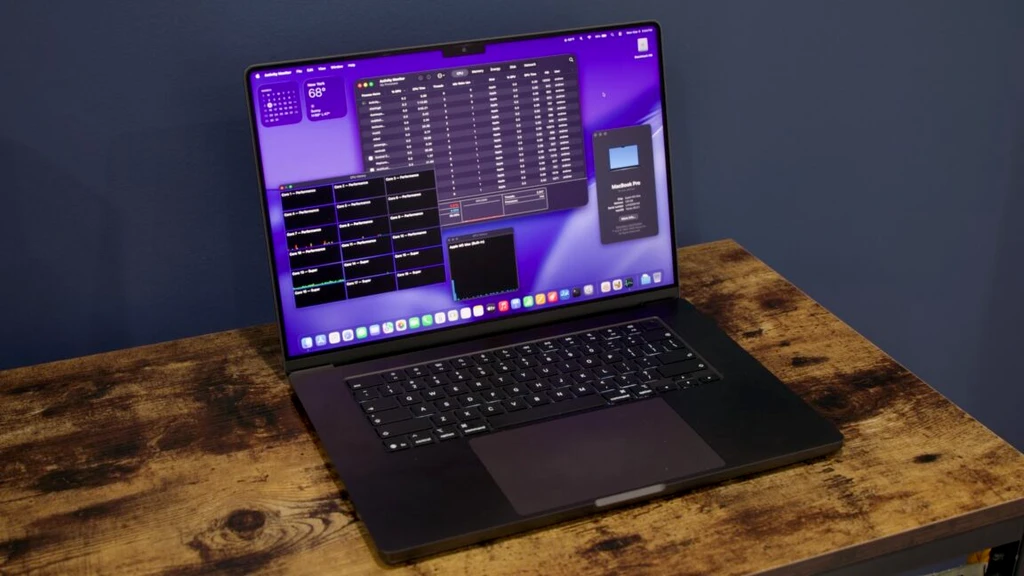
Apple's M5 Pro and M5 Max chips for the 16-inch MacBook Pro represent a significant architectural shift. These chips are no longer monolithic, splitting CPU and GPU cores across separate silicon dies packaged together. The M5 Pro and M5 Max utilize an 18-core CPU die, paired with either a 20-core GPU for the Pro or a 40-core GPU for the Max.
A key change is the elimination of "efficiency" CPU cores in the M5 Pro and M5 Max. All high-performance cores are now designated "super" cores, with a new class of "performance" cores also present. These "performance" cores, distinct from efficiency cores, offer higher clock speeds and more L2 cache, differentiating them from simpler E-cores.
In benchmarks, the M5 Max shows approximately 10 percent improvement in single-core performance and modest gains in multi-core tasks compared to the M4 Max. Graphics performance sees more substantial increases of 20-35 percent. While power consumption is slightly higher, overall efficiency remains competitive. The M5 Pro shares the same CPU architecture as the M5 Max, with differences primarily in GPU core count and memory bandwidth.