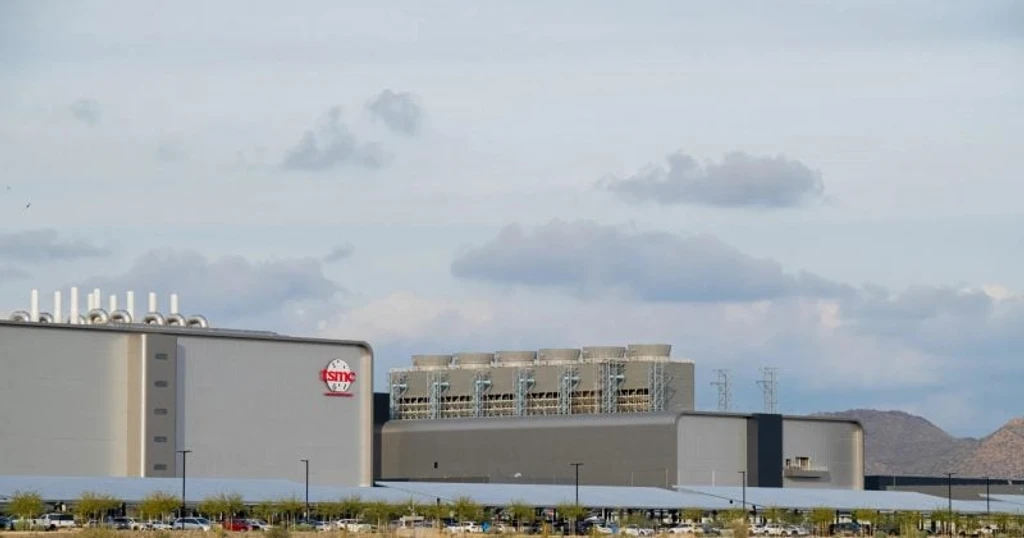
Taiwan Semiconductor Manufacturing Co. has committed an additional $100 billion to its Arizona operations, pushing its total U.S. investment to a staggering $265 billion. That figure is comparable to the GDP of Finland.
The expansion will add four new advanced semiconductor manufacturing facilities in Phoenix, bringing TSMC’s total footprint in the state to 12 cutting-edge chip and packaging plants. Production is expected to ramp up through the end of the decade to meet surging demand for AI chips and high-performance computing hardware.
This massive commitment addresses a critical, systemic risk: the geographic concentration of chip production. The crypto and broader tech industries have long been dependent on fabrication facilities in Taiwan, a region facing significant geopolitical pressure. A disruption there could cascade through everything from AI infrastructure to Bitcoin mining hardware.
The timing aligns with explosive growth in AI chip demand. The investment, announced in July 2026, underscores artificial intelligence workloads as the primary driver.
The move also fits into a larger U.S. strategy to reshore critical manufacturing. Federal incentives and trade policies have encouraged this shift. Phoenix officials have called it the largest economic development investment in U.S. history.
For crypto miners in the U.S., this reshoring trend promises shorter, more reliable supply chains for next-generation ASIC chips, potentially improving hardware availability and costs.
Investors should monitor the impact on Bitcoin mining hardware prices and the convergence of AI and blockchain, where expanded GPU availability could benefit decentralized compute networks.
However, TSMC’s Arizona projects have faced construction and workforce challenges. Delays could prolong existing supply constraints, keeping hardware costs elevated for miners and AI developers.