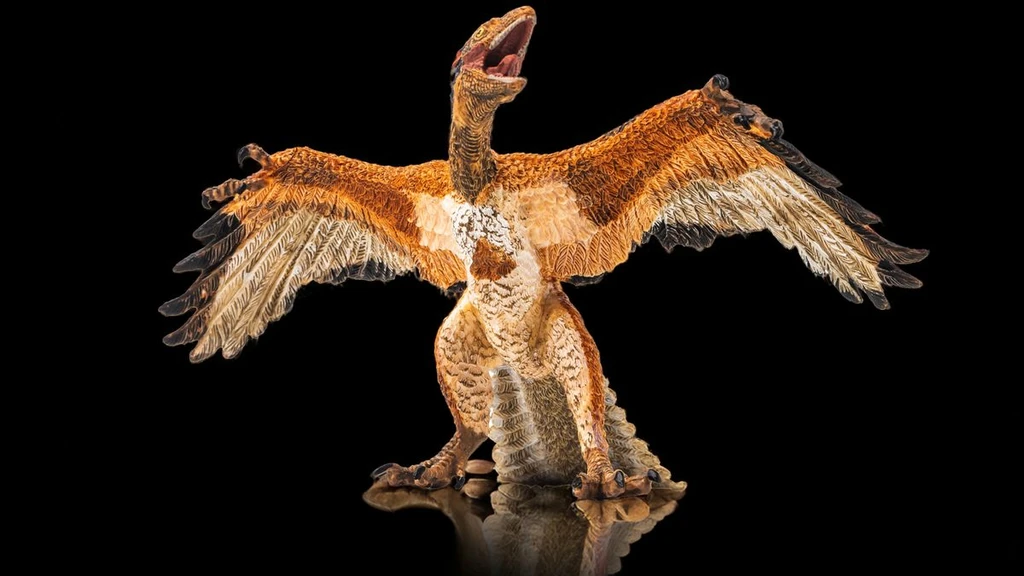
The discovery of the feathered dinosaur fossil, Sinosauropteryx, in China in 1996 revolutionized our understanding of bird evolution. For over a century, Archaeopteryx was the oldest known creature with feathers, hinting at a link between birds and dinosaurs. Paleontologist John Ostrom revived the theory that birds descended from theropod dinosaurs, but lacked concrete evidence. This changed when Phil Currie, on a trip to China, spotted a chicken-sized dinosaur skeleton surrounded by a halo of fluff resembling bird down.
Photographs of the fossil, named Sinosauropteryx ('Chinese reptilian wing'), were brought to a paleontological conference, stunning researchers. The find provided the critical evidence confirming the dinosaur-bird ancestry, a theory previously lacking definitive proof. This discovery triggered a wave of further fossil finds across China, revealing numerous feathered dinosaur species, from simple filaments to complex feathers resembling modern birds.
These fossils, often preserved by volcanic ash, included species like Caudipteryx and Microraptor with true quill pens, and even early tyrannosaur relatives like Dilong and Yutyrannus covered in feathers. The evidence culminated in the scientific consensus: modern birds are direct descendants of dinosaurs.