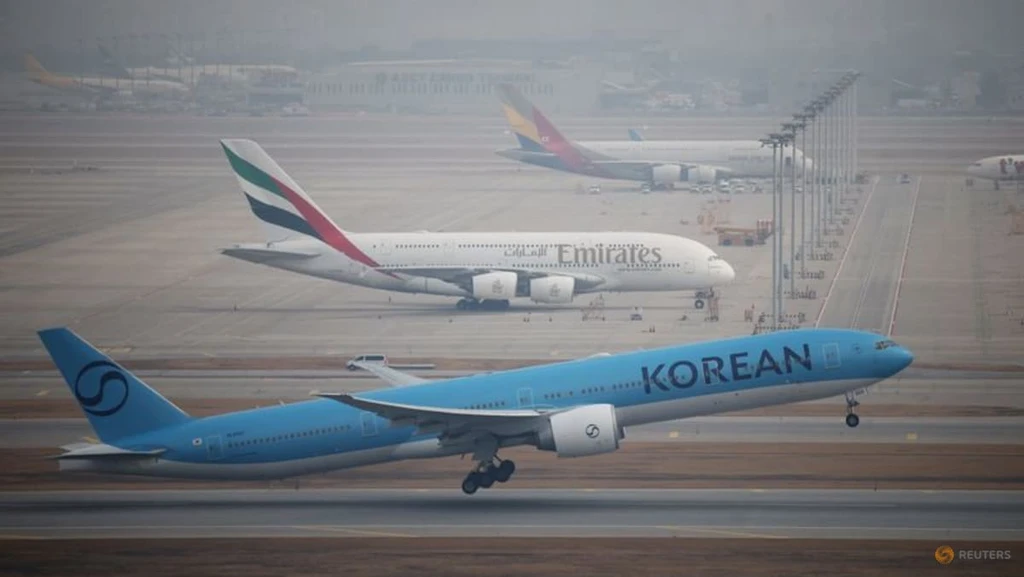
Airline stocks plummeted Monday as escalating U.S.-Israeli conflict with Iran sent oil prices surging. This dramatic increase, with Brent crude futures jumping significantly, ignited fears of a severe travel downturn and potential widespread aircraft grounding.
Major Asian carriers felt the investor backlash. Korean Air Lines tumbled 8.6%, Air New Zealand lost 7.8%, and Cathay Pacific fell 5%. Consumer costs are also rising, with direct flights from Seoul to London on Korean Air Lines jumping from $564 to $4,359 in a week.
Analysts warn that prohibitive costs could curtail leisure travel demand throughout 2026. European airlines like Air France KLM, IAG, and Lufthansa saw declines of 4% to 6%, with major U.S. airlines also down approximately 4% in pre-market trading.
Fuel represents the second-largest operating expense for airlines. While some Asian and European carriers utilize oil hedging, U.S. airlines largely abandoned the practice. The surge in jet fuel costs, amplified by scarce supply and extended flight times due to closed airspace, poses significant operational challenges.
Deutsche analysts caution that without immediate relief, thousands of aircraft could be grounded, and financially weaker carriers might cease operations. A similar spike in jet fuel costs in 2005 led to industry damage, including bankruptcies for Delta and Northwest airlines.
Since February 28, over 37,000 flights to and from the Middle East have been cancelled. Airlines are rerouting flights, carrying extra fuel, and making additional stops to navigate constrained airspace and longer flight paths. This disruption impacts key routes and passenger volume, with major Middle Eastern carriers normally handling a significant portion of intercontinental travel.