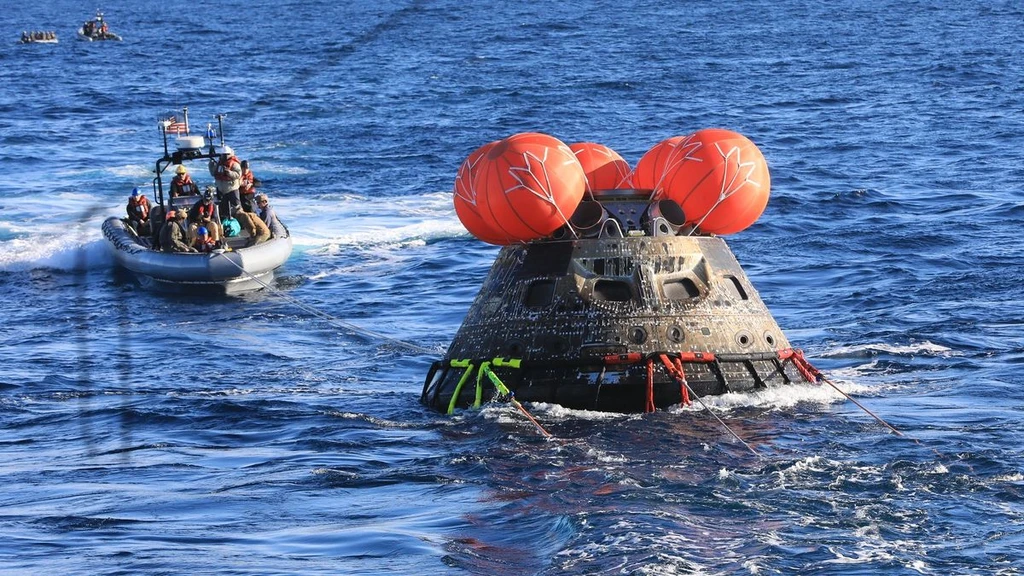
The Artemis II mission faces a critical reentry phase, with the Orion spacecraft's heat shield at the center of expert attention. Despite unexpected damage to the heat shield during the Artemis I uncrewed flight, NASA is confident in the mission's safety. Space expert Ed Macaulay explains the heat shield's vital role in protecting astronauts from extreme reentry temperatures, reaching nearly 5,000 degrees Fahrenheit.
Concerns stem from Artemis I's heat shield exhibiting more severe char loss than anticipated, with large chunks breaking away rather than a uniform ablation. This is attributed to trapped hot gases expanding and causing damage. For Artemis II, NASA has opted for a direct reentry profile, similar to Apollo missions, to minimize stress on the heat shield and allow for more straightforward modeling, rather than the previous skip reentry.
Macaulay suggests a trade-off exists, potentially making reentry slightly less comfortable for the crew but more favorable for the heat shield's integrity. He notes the Artemis II astronauts are highly trained professionals capable of handling increased G-forces. While Macaulay himself wouldn't personally bet his life on the heat shield, he believes there's a significant safety margin, indicating the crew would have been safe even with the Artemis I's observed damage.
He emphasizes the mission's overall technical success thus far provides reassurance for the reentry. The Artemis II mission is seen as the beginning of a new chapter in human space exploration, with ambitious plans for continued lunar presence and future Artemis missions.