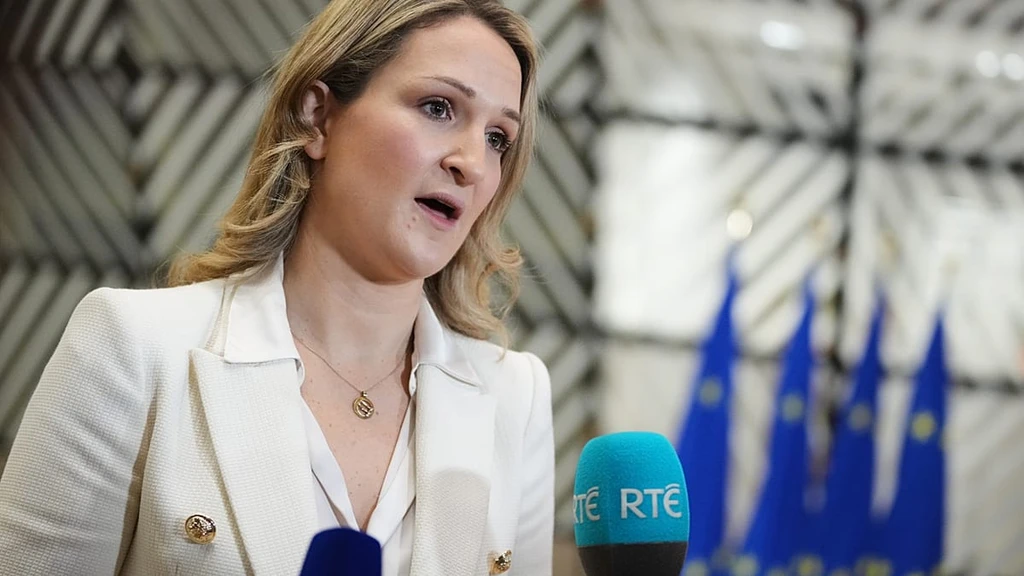
Irish Foreign Minister Helen McEntee has warned that German Chancellor Friedrich Merz’s plan for ‘associate membership’ of the European Union risks leaving Ukraine in a “limbo,” potentially stalling its momentum toward full membership.
Speaking Friday, McEntee said the proposal could create a two-tier EU accession process, questioning whether an interim status would reduce pressure on Kyiv to implement necessary legal and rule-of-law reforms.
“Do you end up in a situation where associated members find themselves in some kind of a limbo?” she asked. “Does that take a bit of the pressure off?”
McEntee’s concerns come as Ireland prepares to assume the rotating EU Council presidency in July, when it will oversee negotiations on Ukraine’s membership bid.
Merz’s five-page proposal, sent to fellow EU leaders, suggests granting Ukraine access to decision-making bodies (without voting rights) and to certain EU programs on a step-by-step basis. It also proposes allowing Kyiv to invoke Article 42.7-the EU’s mutual assistance clause-in case of armed aggression, which Merz calls a “substantial security guarantee” against Russia.
“It is now time to boldly move on with Ukraine’s EU integration through innovative solutions,” Merz wrote.
The European Commission has welcomed the debate but insists that the “merit-based” enlargement process must be respected. Diplomats have expressed skepticism about the plan’s feasibility.
Ukrainian Foreign Minister Andrii Sybiha reiterated that Kyiv’s goal remains “full-fledged membership,” adding that alternative modalities “cannot replace our strategic position.”
President Volodymyr Zelenskyy, who has previously rejected symbolic overtures, has not yet commented on Merz’s plan.
The proposal surfaces as Brussels sees a potential window to lift Hungary’s two-year veto on Ukraine’s accession, following new consultations between Budapest and Kyiv on minority rights.