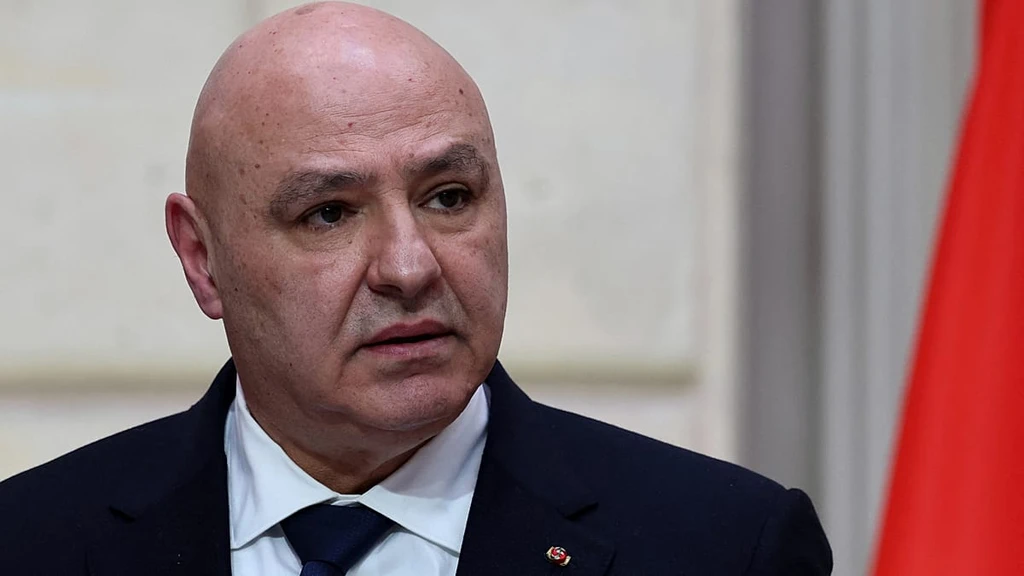
Lebanese President Joseph Aoun directly accused Iran of using Lebanon as a bargaining chip in its confrontation with the United States and Israel. In an interview with CNN, Aoun addressed Iran's Revolutionary Guard, stating: "It is not your country, it is our country." He added, "You are not trying to help us. It is the Lebanese who are paying the price for your own interests."
Aoun stressed his commitment to preventing further escalation, noting that the Lebanese people are exhausted by repeated wars between Israel and Hezbollah, which is backed by Iran. "We are tired and we want to live in peace," he said. The president announced Lebanon is ready for direct negotiations with Israel to secure a ceasefire, emphasizing a "major opportunity to end the state of war."
Aoun acknowledged the challenge of disarming Hezbollah, calling it possible but at a high cost. He criticized Israel's military strategy against the group, arguing that Hezbollah's influence can only be ended through state institutions after an Israeli withdrawal.
Tehran's Response
Iranian Foreign Minister Abbas Araqchi rejected Aoun's accusations in a post on X, writing: "Based on Mr Aoun's remarks, one might think that Iran is occupying one-fifth of Lebanon." He added: "If Lebanon were a bargaining chip in Iran's hands, we would have reached an agreement a long time ago." Araqchi concluded: "Save Lebanon from your real enemy, Mr President."
Renewed Violence
Despite diplomatic signals, an Israeli airstrike hit a Lebanese military vehicle, killing several soldiers including two officers. This incident threatens the fragile ceasefire efforts.
Hezbollah refuses to discuss disarmament before an Israeli withdrawal, with its secretary-general Naim Qassem calling negotiations a form of surrender.
Since late February, Israeli military operations have killed over 3,516 people and displaced more than one million in Lebanon, according to official figures.